
CLASS OF 2000 | 2026 | FALL ISSUE
2000 ARCHIVES | HOME
← 1999 | 2001 →
Trace Peterson has been doing a book tour for her new book of poems, The Valleys Are So Lush and Steep,which won the Alma Award from Saturnalia Books, and was a finalist for the 2025 Foreword INDIES Book of the Year Award in Women’s Studies. She also published an article “Why Bad Poetry Still Happens to Good People’ in the journal Boundary 2. Trace continues to teach English and women’s studies at UConn.
Joe Wiggins proudly shares, “My daughter, Leilani, will be attending Villanova University this fall. She is majoring in chemical engineering and made the NCAA Division I Villanova dance team as an incoming freshman.”
Tim Howard writes, “I’m in Berlin and have been making narrative podcasts for the German weekly newspaper Die Zeit. We recently put out a five-part investigative podcast called The Gaza Chef (in English, lucky you!). It’s an investigation of the killing of the head chef of a soup kitchen in Gaza. This was an unusual challenge, since we weren’t able to go to Gaza, but our research took us much farther than I’d thought possible and well into the inner workings of the IDF.”
Leora interviewed two recently published classmates about their new works:
Congratulations to Josh Morgenstein! “After many years as a professional ballroom dancer, I’ve tried my hand at writing a novel (and it has nothing to do with dancing). The League of Dangerous Young Ladies is a YA fantasy adventure set in 1909. Described as ‘Enola Holmes meets Buffy the vampire slayer,’ it follows the daughters of Victorian literature’s greatest villains as they fight to save the world. It’s perfect for everyone from young teens (12 and up) to fantasy-loving adults. Published by Sourcebooks under their Stonefruit Studio imprint; it became an instant bestseller on the Indie Bestseller List and is available wherever books are sold.”
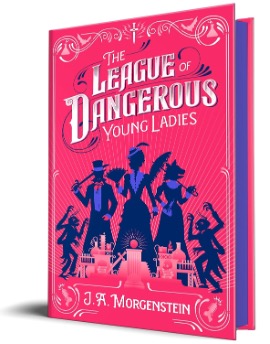
LW: “Congrats, Josh! I love the title. I also want to know how you got into professional ballroom dancing! I danced a lot at Wes.”
JM: “Oh, gosh. For someone who doesn’t always talk that much, dancing is the one thing that I’ll actually go on too long about, so here’s the short answer: Learning how to ballroom dance was something that I had always wanted to try, and I eventually worked up enough courage to walk into a studio to take a lesson. And then I basically never left.
“Dancing changed my life. It taught me how to be in the moment instead of in my head and given that everything ‘’d known up to that point had been academia, this was a huge change. Because the dancing had such an impact on me, I wanted to share it, so I eventually started teaching. From there, I spent years competing both with my students and with a partner (predominantly in country-partner dancing circuits, which was unexpected because I was never a country music person—but that’s a whole other story).
“Then COVID hit, and the dance world shut down. During the lockdown, my friend Owen (also a Wes alum) posted about it being a good time to do some writing, so I gave it a try. After a winding road, I eventually ended up with The League of Dangerous Young Ladies.
“To promote the book, I’ve been visiting local bookstores, seeing how much I can teach one of the booksellers to dance in five minutes and then posting it on Instagram. I call it ‘Dancing with the Stores’ (because I’m a dork). So far, I’ve danced at 15 stores throughout New England and New York and met so many amazing booksellers. You can check out the videos on my Instagram page, @jamorgenstein.
“My book launched on June 2 and became an instant bestseller on the Indie Bestseller List. The League of Dangerous Young Ladies is available now wherever books are sold. It’s published by Sourcebooks, the first book from their amazing new Stonefruit Studio imprint.”
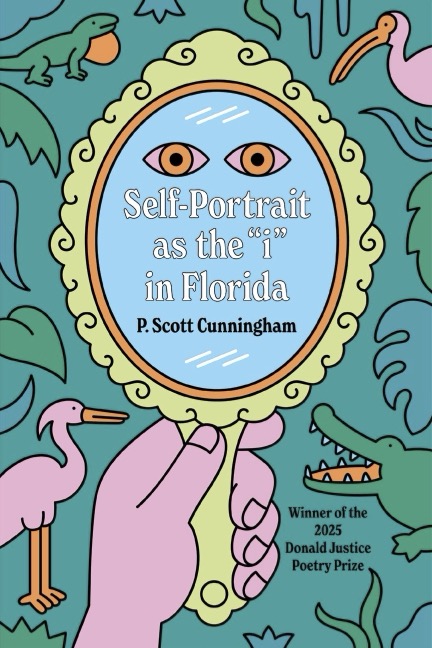
Congratulations to P. Scott Cunningham, winner of the 2025 Donald Justice Poetry Prize!His poetry collection, Self Portrait as the ‘i’ in Florida, has been published this year by Autumn House Press.
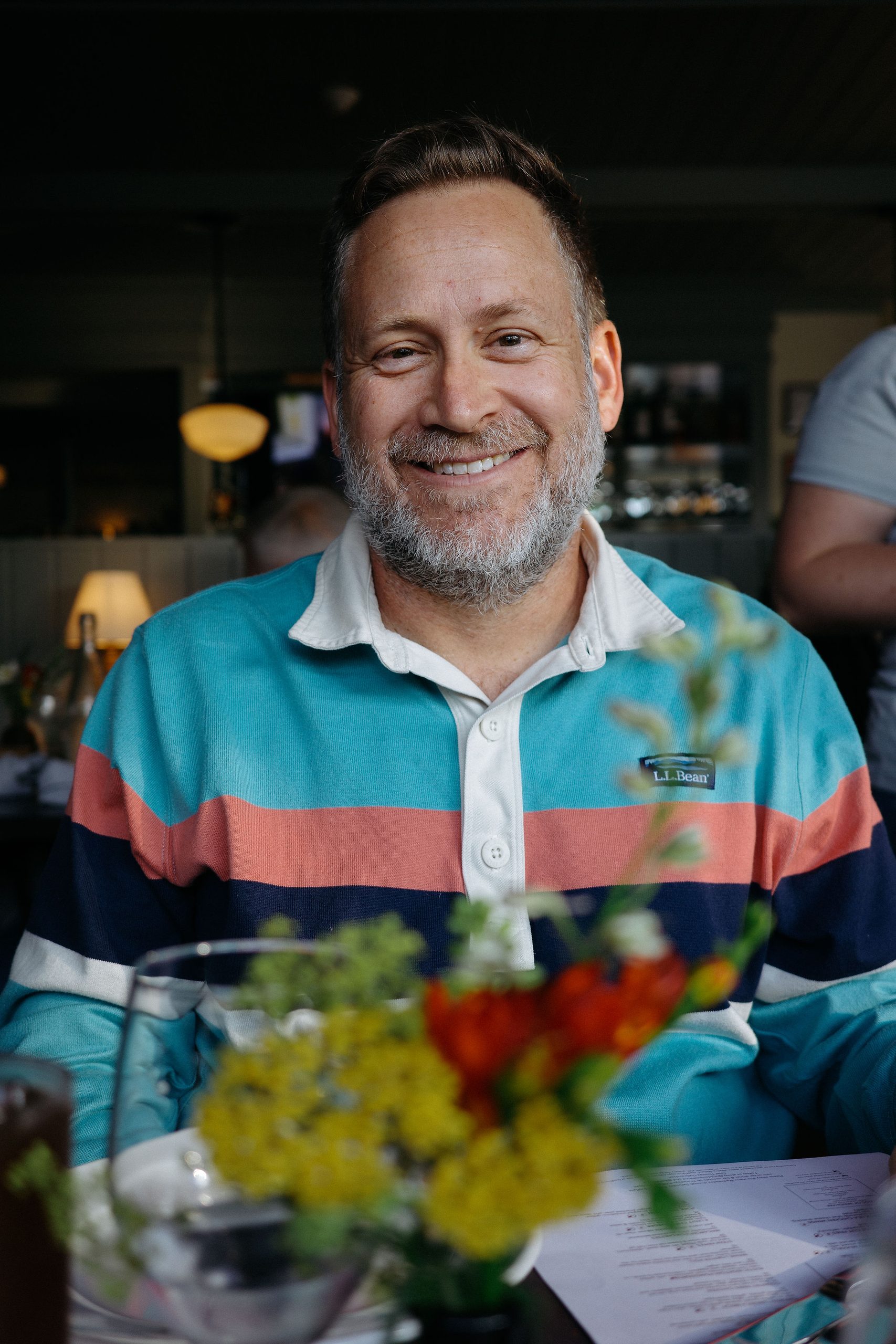
LW: My copy is full of underlines and Post-its! So, I’ll flip through pages randomly to start us off. I’ve landed on “My Heart, a.k.a., a Python Breeding Facility Destroyed by Hurricane Andrew.” Love this one, especially, “What crawls out is forever hungry/ and doesn’t care that no one wants it/doesn’t care that no one called it by name.” There is a conflation of the Self with Destruction in this poem. Yet somehow destruction and the human heart both triumph. Is there a word for that? Is that what you see? How did that poem come to be?
PSC: The book is an ode to Miami, but it’s also about me. In attempting to describe the Miami I love, I’m also talking about myself. These are lyric poems after all—there’s no way around your own self becoming entangled! So, I tried to be up front about that, especially in this poem, which is ostensibly about a very real python breeding facility that was destroyed in a hurricane but it’s also a metaphor for my own emotional life. Most of the poems in the book that are about a specific place (usually tagged with its physical address) are doing something similar: Me + Miami.
And to answer the other part of your question: I don’t think there’s a word for that triumph? Maybe hope? I don’t know! But I think you’ve latched on to a central feeling in the book: I love Miami, but it’s also a city that’s constantly being destroyed by its ‘leaders’ and how do you love a place that is always disappearing, always changing against your will, always making it harder for the people who live there to continue living there? If there’s an answer to that (and, because these are poems, I’m not sure there is), maybe it’s that we love the places we love because what other choice is there? Hate your city? Hate yourself? We keep loving because the alternative is much, much worse.
LW: I appreciate how your work also wrestles with our own angst, “The choice you’ve been given is beauty or beauty, but still, you punch the air, demanding another option.” (From “Ode to Traffic, South Miami.”)
Some poems touch on insights from fatherhood. In writing about surrealist Leonora Carrington, Marina Warner writes, “Bringing up her sons affirmed for her all over again the high value of the creaturely.” I’m curious if there is a link between “the creaturely” and fatherhood for you? The nightscape poems in particular are so tender. And incredible creatures like talking unicorns appear. There is a tenderness as well as a sense of foreboding/Noah’s Ark vibes.
PSC: Fatherhood has definitely been a boon to my creativity, in multiple ways. First, kids do and say hilarious, weird, and poetic stuff all the time. So, living with them is like living with co-writers who don’t mind (for now) that you steal all their best material. Second, living with kids has made me a better and more thoughtful person. Third, I’ve noticed how rarely fatherhood is associated with tenderness in our culture (instead it’s about some mythical shortage of “toughness”), so I’m always trying to make sure tenderness is the headline when I speak about my kids. I don’t have a lot of “missions” in my work—the point of poetry is doubt, after all—but that is a particular mission of mine.
LW: “Toughness” as in “father = protector?”
PSC: As in a million different ways to interpret that very nonspecific term, but mostly as in “what kids need is discipline,” although I think most fathers mean “cruelty” when they say “discipline.” When I taught middle and high school, I learned that real discipline isn’t harshness or punishment; it’s the opposite—it’s about caring enough about your students to show up every day prepared, to structure their time so they can be successful, to pay attention to each of them individually as people. And that’s tenderness, not toughness. Parenting feels similar.
LW: It sounds like you are highlighting the difference between “authoritarian” and “authoritative” parenting styles. In clinical settings, “authoritative parenting” means strict control, stern punishment, and little flexibility. And “authoritarian parenting” means responsive relating, with dialogues about expectations and consequences more appropriate for a child’s healthy sense of self/development. Your “authoritative” approach is shown to help the development of better self-esteem, social skills, and mental health.
PSC: I understand the important clinical differences between the two, but, as a poet, I don’t even like the term “authoritative.” What are parents or teachers ever truly authorities of? I’m more comfortable letting my kids know that I don’t have all the answers, that there’s no magical day ahead when they’ll have things “figured out.”
LW: Music is present throughout the poems. When you hold the collection, is there “a sound” for the book as a whole?
PSC: I don’t think of the book having a sound as a whole, other than I hope it sounds like me speaking! I write (and re-write poems) by reading them aloud. I always want to be talking to people, not about them.
LW: A phrase from the collection is the “Kingdom of Time.” What has been percolating in your writing more recently? Are there any current or future projects you’d like to share?
PSC: I have two books coming out next year. The first is a collection of essays called Everything Is the Sea: A Portrait of Miami. I’ve been thinking of it as a companion piece to the poems because every essay is an ode to Miami. Then shortly after that comes an anthology of Florida writers that I co-edited with my friend Kristen Arnett called All This Beauty. So, as you can tell, a sense of place has been foremost in my mind, and in particular, a desire to portray Florida differently from how it’s portrayed in the news and social media.
LW: Your work definitely accomplishes this. Thank you for your time! And congratulations.
SERENA JONES | jones.serena@gmail.com
LEORA WIEN | leorawien@gmail.com