The class has increased its activities outside of our quinquennial reunions (there is one coming next year…). Our quarterly class Zoom reunions, which actually originated with planning committee meetings for our 50th Reunion, continue, and all are cordially invited to join in. Announcements of these calls go out to the whole class mailing list, but if for some reason you are not receiving them, please send me a note, and I will see that you get them in the future. Dave Hagerty, Ron Ashkenas, and Bonnie Blair are continuing the work of the Reunion Program Committee and arranging more structured Zoom meetings, with speakers of interest from our class and the Wesleyan community in general discussing a wide range of interesting subjects. Again, if you are not getting notice of these, please let me know. And finally, the University is developing a new program for superannuated folks like us who have survived their 50th reunions—College Row Classes. As such, we are entitled to participate in special programs, both on campus and remotely. Plus, we get a special lunch and other benefits at the spring Reunion weekend. Since I am lucky enough to live close enough to drive up for the day, I have not missed a reunion in several years, and I encourage all of you to come as well.
John Manchester has released a new album—Bach Keyboard Works Arranged for Virtual Orchestra. It’s available on Apple Music, Amazon, and Spotify. I’ve acquired it and enjoy it a great deal. It’s very reminiscent of Stokowski’s orchestral transcriptions of Bach organ works, except this time the orchestra is virtual. As John describes it:
“When I returned to music five years ago after a long break, all I wanted to do was play J. S. Bach on the grand piano my wife found me. My old hands, neck, and back had other ideas—variations on “ouch!” I was halfway through learning the long, difficult G Major Fugue from book one of the Well- Tempered Clavier when I came to the terrible realization that I wasn’t going to make it to the end of the piece without my hands falling off. . .
“I’d been toying with the notion of returning to composing using the recently impressive digital tools of theVirtual Orchestra. If I couldn’t finish playing the G Major Fugue, I could arrange it for my glorified ‘band in a box.’ When I started inputting the piece to my computer, the results sucked. I’d made my own music with a computer in the past . . . I started on an album and gradually discovered why the fugue sounded wrong. My new digital tools were shiny and sharp but required new skills on my part to make decent music with them. . .
“Composing an album of my music was great fun. So, I did another. At that point, I felt I’d said what I needed to for the moment. Now that I’d mastered my new tools, what about that Bach fugue? I’d originally wanted to orchestrate it because I hate not finishing things I start. I had another reason— orchestrating this piece might reveal aspects to me and a listener that weren’t apparent when played on a keyboard. . .
“Aside from my own compositions, I only perform Bach. And I listen to a lot of it, mostly his vocal music. It does something for me that no other music does. It arouses the deepest feelings. The majority of his music is devoutly Christian, which might be enough to convert me if I didn’t know better.”
Steve Scheibe reports: “Angela and I recently returned from a month in Japan, and my Japanese continues at the level of my first trip in 1985. I was thinking now that I met up briefly with Connie (Sutherland) Hernandez on that first trip and have not had contact since, at least to my recollection. All good in California and still going back and forth to Brazil. Finally, I speak frequently with my brother, Karl, and he is doing well and has nice recollections of our class. Ha ha!”
I will leave it to the rest of you to interpret that “ha ha!”
Mark Lerner says, “On September 30, 2024, after 49 years of service, I retired from the U.S. Labor Department as a senior attorney in the Division of Occupational Safety and Health in the solicitor’s office. I get to spend time doing my wife Inna’s favorite activity—fitness. Our older son, Misha, is a graduate student at UC Berkeley, pursuing a doctorate in Slavic studies. Our younger son, Sammy, graduated from Washington and Jefferson College and is planning to pursue a career in genealogy.”
Warren White makes the following suggestion: “DMV residents should consider the Richmond, Virginia, Fan Historic District Holiday House Tour.As a volunteer docent for the past five years, I recommend a guided tour of the largest, intact, U.S. Victorian district while it is decorated for Christmas.”
Edward Swanson sent holiday cheer with a poem:
FOR MY FRIENDS AND FAMILY AT THIS HOLIDAY TIME!
Last Christmas I sent you a poem
It wasn’t too good, but it was my own.
This year, yet again pressed for time
I’m sending these words again in a rhyme.
It’s been a hard year here, I have to admit.
To get through these months has taken some grit.
The fire from Eaton nearly got our poor home
And though it was spared we had to leave it too long.
A broken arm made things quite hard for a while,
And deaths of good friends seemed to put sadness in style.
But all of you give me great comfort and cheer.
And I want to say thank you at this time of the year.
I have fond memories galore of places and things
And each of you is in there like a bright shiny ring.
Happy holiday, dear friend, may the new year bring you
From John Schimmel : “I remain the extreme opposite of retired. Still commuting to the UK to work as executive producer of narrative content for the video games Squadron 42 and Star Citizen; still teaching screenwriting at UC Riverside’s low-residency creative writing MFA program; still rolling spec projects up the hill. Managed (finally) to get my wife, Maureen, to the UK for a two-week, theater-and-museum holiday. . . .”
Harrison Rue “retired” in 2024, after 11 years leading Honolulu’s and then Hawaii’s transit-oriented development (TOD) programs. Before returning to Honolulu, he was a lead consultant to federal agencies under President Obama’s sustainable communities’ partnership. Hank is starting to draft his next book, but if you want to “focus local” on your own neighborhood, check out his “Real Towns: Making Your Neighborhood Work”—a free download on his LinkedIn page.
“After retiring from a 50-year stint in the rabbinate, I now reside with my wife, Helen, in beautiful Asheville, North Carolina,” says Brett Goldstein.
Dave Lindorff says, “I’m still ‘committing’ journalism, trying to expose the corruption, criminality, and mendacity of the U.S. government and the obscenely wealthy ruling elite who fund its leaders. Lately, Joyce and I have been spending half the year in Cambridge, where she is a lifetime fellow at Clare Hall, a graduate college there, and half the time home in the Philly area, where she’s still a Temple professor.” He also notes, “Unfortunately, we will be in Cambridge for the third term there, which starts on May 2 and runs through the end of June, so I won’t be able to make the epic 55th (!) Class Reunion in person. I hope there will be some opportunity to meet online.”
Joe Keller spends year in Cape Cod, Massachusetts, and Palm Beach Gardens, Florida, playing golf and boating. Still managing a commercial real estate portfolio—retirement is overrated. Continue to go to Wes Homecoming but amazed at how much Wes has changed ideologically in 55 years. Hoping DKE reopens—site of many good times and friendships.
“I was back on campus for Homecoming in October and really enjoyed the “past 50th Reunion Lounge in the PAC for the game. I am enjoying semiretirement in Denver after selling my business and am looking forward to our 55th Reunion in May. I have also invested in a start-up, which has added a new dimension to my workday. In my spare time I am trying to learn Japanese. It is the most challenging learning I have ever undertaken. I enjoy regular contact with Greg Friedman, Jim Tober,John Hastings, and Rich Suval via text and Zoom (courtesy of Greg), writes David Siegel.
“When I joined demonstrations against the government in ’68 and ’70, I never thought I’d be doing it again 58 years later. Never thought I’d be alive 58 years later, but that’s another story,” writes Stephen Voorhies.
Marvin Williams is alive and has nothing new to add.
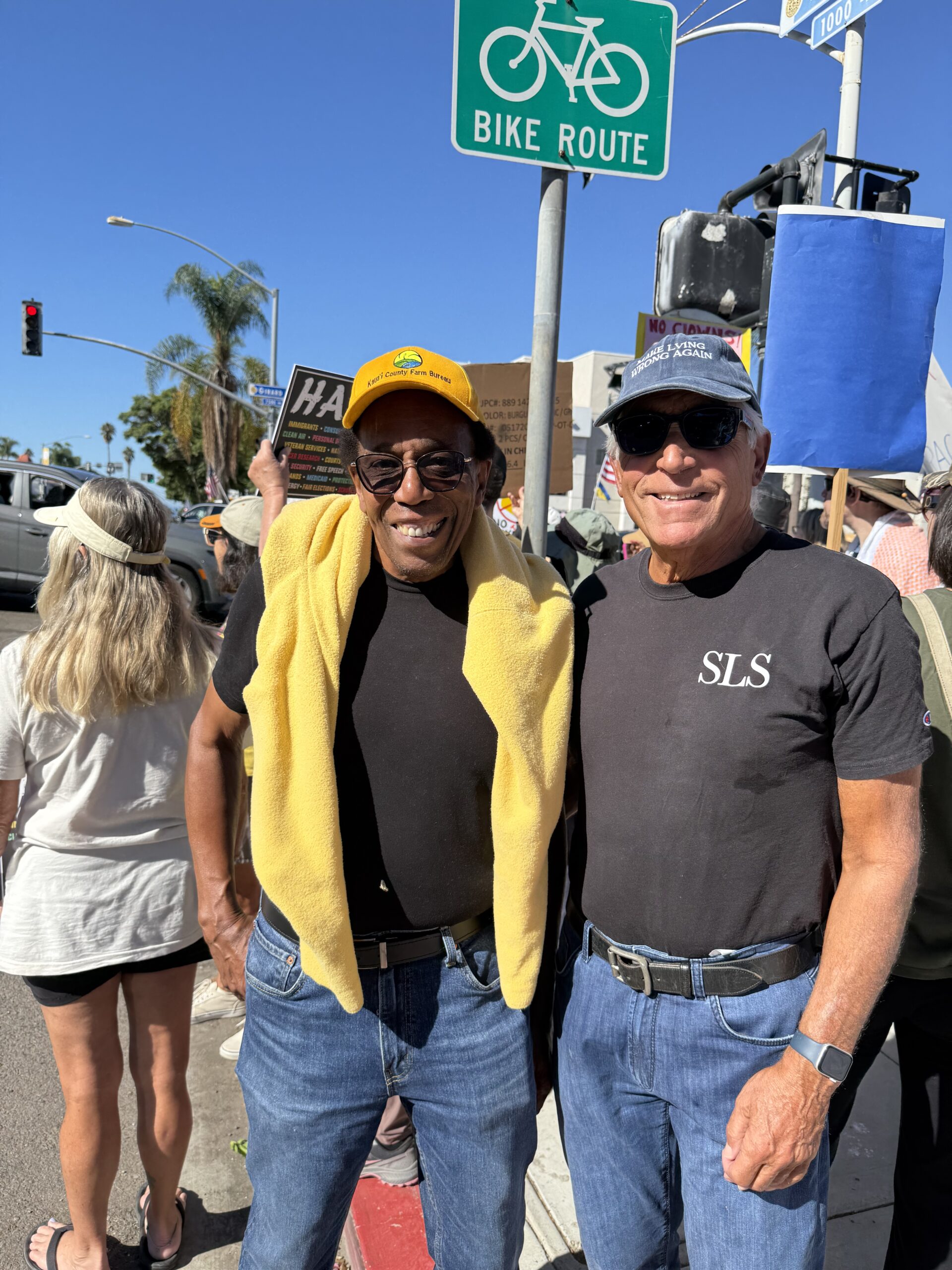
Ran into Stephen Ferruolo at No Kings rally in La Jolla, California, where we both reside. He provided a picture of us on the corner. Been attending many of these rallies around the country—there always seems to be one everywhere I go, including red states!
Neil and Stephen
Take care everyone and remember the 55th Reunion is coming up May 22–24. Hope many of you can attend. Aloha.
Sadly, the Fall ’25 Issue of the magazine reported the deaths of five classmates. I had previously reported on the deaths of Bob Segal and Calvin deGrasse. Here are links to obituaries for Brian Dawe, Michael Mastergeorge, and Randy Miller.
Additionally, we lost Peter Miceli on October 31, 2024.
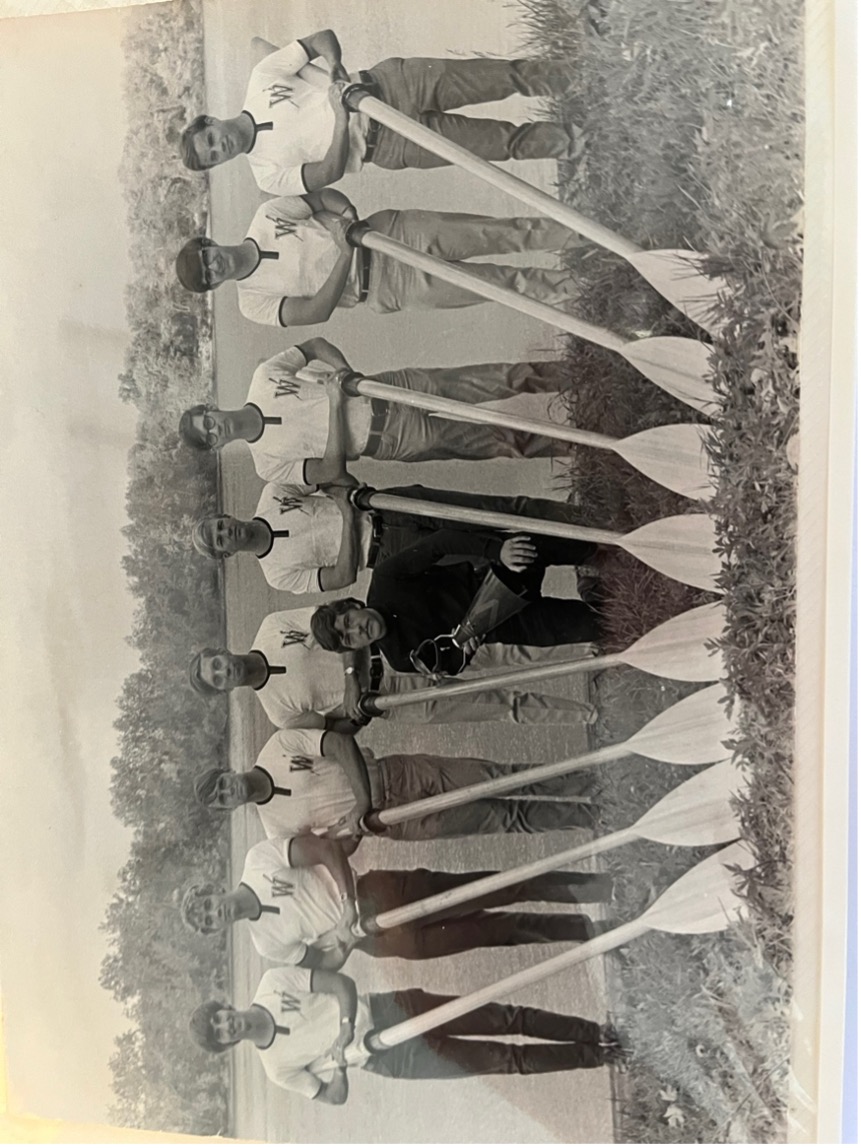
Russ Bradshaw (second from left) and Brian Dawe (third from left).
Russ Bradshaw wrote in memory of crewmate Brian Dawe, sending a team photo (at right). Also, Russ had an interview published in Wesleyan’s fall edition. He says, “It describes my experiences in a New Age group that worked for ‘inner and outer peace,’ based in Queens, meetings in NYC at United Nations. Unfortunately, the leader had a well-hidden ‘shadow side,’ of MeToo sort. . .” The experience resulted in a traumatic experience for Russ’s family, so he “decided to devote my efforts to exposing how cultic groups recruit and try to retain members.” I concur with Russ’s suggestion to read the piece (on p. 36) if you missed it.
Our very own Brooklyn cowboy, Jeremy Serwer, wrote: “Still living the country life here in northeast Connecticut—close enough to enjoy civilization when needed, yet far enough away to mostly be away from it. Working very part-time with one client; on three nonprofit boards; doing lots of volunteer work focusing on veterans, antisemitism, and equine pursuits. Mostly, working or riding horses three to five days a week. Had a decent 2025 Cowboy Mounted Shooting season. Wife, Nancy, is still flying for American Airlines as a first class purser out of Boston; finally starting to talk about retirement, maybe two years away. Works well, as I managed to rob the cradle anyway—43 years ago.
“We’re a chip shot off any highway Wes mates might travel between NY and Boston. It’s beautiful on our property. There’s a guaranteed lunch for anyone wishing to take a driving break (jeremy@theserwercompany.com). Last visit we enjoyed was from Chase Van Gorder ’71, Wes Beta bro. Great fun.”
By the time you read this, Jamie Kirkpatrick’s new novel, The People Game (Koehler Books), should be published. More information appeared in the Fall ’25 Issue.
(Dr.) John Yurechko caught us up on his news: “I have published two volumes of poetry, my first, titled Head Lines, way back in 2014; followed in 2025 with Second Thoughts.
“I retired from a 30-year government career in 2011. I have given lectures to various audiences on the Ukraine war, NATO, and other national security topics. I have written articles and contributed to books on Russian/Soviet military issues.
“I met my wife, Jane, a Wellesley graduate, when we were both in graduate school at the University of California, Berkeley. (I completed my PhD in history in 1980.) We settled in northern Virginia, then moved to a lakeside home in central Virginia in 2016.
“Alas, my rickety body demanded that I cease active participation in Revolutionary War (with the 1st Virginia Regiment of the Continental Line) and Civil War (28th Massachusetts Regiment) reenactments, although I continue to do living history talks for local school classes.
“Three daughters and a grandson named Wesley (pure coincidence!).
“I noticed in your most recent notes an update from Steve Talbot, remarking that he was just in Vietnam. Jane and I just finished a trip there and to Cambodia in October 2025. Vietnam was still decorated with flags and slogans celebrating the 50th anniversary. It was quite an experience.
“I get together with Chuck Caramello (who lives in Maryland) on almost a weekly basis to eat sushi and ‘chew the rice.’ Chuck, a professor emeritus of English, retired as a dean at the University of Maryland. He is working on his second book on equine and equestrian history. Jeff Nye (who lives in northern Virginia) joins us at times as well.”
Frank Waters is the equivalent of folks who call in to a radio show and introduce themselves by saying, “Longtime listener, first-time caller.” He sent a summary of his life since graduation: “My wife, Janet, and I have been married for 50 years and have two adult children and three grandchildren.
“I never left Connecticut after Wesleyan. I went to work for a Hartford insurance company after graduation and a few years later, bought a West Hartford property and casualty insurance agency (from Page Harman ’42, another Wesleyan alumnus), which I owned for 35 years. I sold it 12 years ago but remained active on a part-time basis in the insurance industry until last year. Now I just play a lot of golf, run a fantasy football league, which I have been commissioner of for 39 years, and babysit for our two younger grandchildren. Oh, I was also the varsity girls basketball coach at Avon, Connecticut, high school for 19 years (1997–2016), where I had a career record of 378–95, with 13 league championships and one state title.
“Wesleyan alums that I see most regularly include Brendan Lynch ’68, Jim Akin’72, John Papa ’79, and occasionally Gary Walford’71 and Brian Silvestro. I do get back to campus a couple of times a year for athletic contests and golf outings. And I promise to make our 60th Reunion if I am still sound of mind and body.”
Frank promised his father to write a book about his family’s experiences in WWII, and A Drumstick for Thanksgiving Please is now published. Frank’s description: “It is a true story of the Waters family journey, basically through the World War II years. The principal figures are my father, Frank Waters Jr. ’42, and my uncle, William Waters ’42, who were both Army Air Corps pilots and [Wes grads].”
“Frank’s debut literary work fulfills a 30-year-old promise he made to his father, a World War II fighter pilot. A Drumstick for Thanksgiving Please chronicles realities of life in the 1940s, not only for the faithful U.S. Air Force pilots, but also of their families during their absences.
“With multiple family members away in Europe, the Waters family corresponded, even when one of them ended up as a POW in a German camp. Their close relationships carried them all through the war and beyond, proving that family ties make a difference when faced with adversity.
“Follow the decades-long saga of one family who thrived despite the difficulties of a world at war.”
Edward HazenWalker, aka “Sachin Hazen,” wrote (I believe for the first time) and shared a lot of news and a fascinating story:
“After graduation, cum laude Phi Beta Kappa, I traveled across the country in a VW Bug. Came out as bi/gay in Berkeley, mingled backstage with Joan Baez and Mimi Farina, had my mind exploded in Monterrey, stayed up all night writing/channeling ‘the wisdom of the universe.’
“Returned to the culturally OCD East Coast to share New Age consciousness, failed miserably. Had a breakdown, found the will to live again by following my intuition to my ancestral homeland, the then Soviet Union. Had a successful career in IT, made a lot of money in real estate in Boston. Spent five years in an ashram in western Massachusetts, became a psychotherapist, manifested a beautiful home surrounded by forest in Connecticut.
“Contemplating the end of life, I moved to Mexico to the decadent Oaxacan Coast to relax and chill until death. Instead, my body got stronger and healthier and I had to recalibrate. As a spiritual teacher, I was invited to stay in beautiful homes in fascinating places, San Miguel de Allende, the Ansonia Hotel in Upper West Side Manhattan, and now the Mojave Desert.
“Along the way I had the freedom and encouragement to begin writing again. Short stories, often highly erotic, poured forth from me. After the death of my mother, I started to spend more and more time in the next dimension communing with her. This coincided with developing abilities as a shaman, and ultimately as a psychic and channel.”
Jerry Cerasale sent good advice (for me, at least): “At our age it’s time to retire.” He says, “I’m still enjoying my time on the Eastham Select Board. However, I’m continually amazed at the ‘pressing’ issues that citizens raise. Eastham is in the midst of facing a state mandate to put in sewers and a wastewater treatment plant, covering new bonds for installing a new water system (before 2020 there were no fire hydrants in town), and paying its part of a $170 million high school. The pressing issues from many citizens are pickleball courts and usage and dog walking. I’ve learned that many times it’s the little things that count.”
Tim Greaney’s new novel, Taking Up Life in Both Hands, is available on Amazon. It’s a satire about a large Catholic hospital system that has lost its way and fallen prey to profit-hungry executives. Information about his first novel, St. Sebastian School of Law, a satirical take on law teaching during the first years of Trump, can be found at www.timgreaney.net.
Peter Ratner wrote, “In my case, I would say no news is good news. We are back in Seatoun and hopefully finishing our house renovation by the end of the year. Did a trip to Scotland, London (where our daughter married her partner after 20 years and two children), and NYC in October. We look after our youngest granddaughter every Thursday. Other than that, we just keep on keeping on.”
From David Jones: “I’m now in my 38th year as president and CEO of the Community Service Society of New York, a nonprofit, and a member of the Board of the MTA (Metropolitan Transportation Agency of New York). Still not quite ready to retire but maybe in two or three years. Enjoying my three grandchildren: my 13-year-old Sophia in Boston and my five-year-old Acher and three-year-old Ren in Brooklyn.” He says that he had “a recent advocacy victory, after 10 years of effort, led a successful campaign called Fair Fares for half-priced fares on subways and buses for low-income New Yorkers. To date, more than 300,000 people have signed up. It’s this kind of work which keeps me going well after my expiration date. Best, David”
Bruce Williams sent an update: “I got a tick-borne bacteria, anaplasmosis, which upset my equilibrium —listing to port—which sent me falling down [the] stairs one hot midnight in July 2024, the eve of getting treatment, during which I broke my neck, hence my lengthy rehabilitation. I was working on a film at the time and was unable to bring it to something like a finished form until last spring, eight months, and I’m not completely happy with what I’ve done since my fall. Gives me something to aim for in between poems.”
For those of you who are a bit poetry-challenged like me, Bruce included this note: “Lots of pentameter / except the first line / iambs not so much).”
CLASS NOTES
Aloha, Oy Vey, Aye Bobo, and Howdy!
Last time I wrote to the class as a whole
was for our 50th Reunion book,
but I never got a copy. Maybe
there was some right-wing sabotage. Maybe
the post office was being set up to fail.
Maybe it was just your standard SNAFU.
Now our class moves ever closer to the
back page of the alumni magazine,
ever more onto obituaries.
I almost made it. Anaplasmosis,
fractured cervical vertebrae, rock star
neurosurgeon, a book load of nurses,
stuff of legends. My rehab goes well, but
I still list a bit to port. My left foot
still tends to drag. Common names escape me,
but I delight still in what I read, like
after lights out in the women’s lock-up
in Greenwich Village when a sister calls,
“Hey, Angela! What’s imperialism?”
Since my fall, A.I. has metastasized.
Still quite fallible, it says a friend died
two years ago. Wrong. It rightly says I
misremember what professor Davis
actually wrote. The correct copy is,
“Angela, what does ‘imperialism’
mean?” “Lock-up” in the House of Detention,
not “Lights out.” Same thing. Approximately.
Angela answers, teacher that she is.
What I remembered was more dramatic,
more cinematic, and where but in books
can one be a political prisoner
with Toni Morrison as editor?
How great is that? A happy Hollywood
ending too. She goes free as a spirit.
Stuart Frank sent an update on his book publishing: “Delighted to report that my book Biographical Dictionary of Scrimshaw Artists, the product of 35-plus years of research, has now been published in two volumes by Scrimshaw Forensics® and is available online at Amazon.com. This clears the path for me to look for a publisher for my next grand opus, The Herman Melville Song Book, a scholarly anthology and analysis of the authentic songs, ballads, tunes, and chanteys referred to in Redburn, White-Jacket, and Moby-Dick. In a way, it’s a follow-up to (or a follow-through) to my first book, Herman Melville’s Picture Gallery: Sources and types of the “pictorial chapters” of Moby-Dick (1986). Hints and contacts from classmates shall be greatly appreciated! (stuart.m.frank@verizon.net) Meanwhile my wife, Mary Malloy, has been lecturing occasionally at Wes and is busily engaged in writing articles and chapters on maritime history, Indigenous Northwest Coast art, a book about Americans in the Pacific in the 19th century, and her fifth novel (something about a female pirate in the post-Napoleonic era), while I continue as editor of the triannual journal Scrimshaw Observer and as founding director of the Scrimshaw Forensics® Laboratory. So, we’re both busy in retirement. And I expect you are, too.”
I heard again from Andy Edlen. In case you missed his saga online awhile back, here it is again: “On the heels of graduation back in the Pleistocene, Jeff Wanshel ’69 told me of a call he got from a high school friend of his, John Emulin, leader of a band called Lothar and the Hand People, about a job opening at Jimi Hendrix’ Electric Lady Studios on 8th street in Greenwich Village. I went to work there a bare week before Jimi’s sad passing. Over the next couple of years, I went from gopher (go fer this . . . ) to night manager to staff engineer. Lots of brushes with fame, amazing audio adventures and a ringside seat viewing the greed and venality of the record biz. The ensuing decades were filled with a blur of bands, work at West Coast studios and some time on the road backing up Bobby Freeman (Do you Wanna Dance and The Swim in a kind of white-boy soul revue. Then, a couple of decades making music and sound fx for computer game companies in the Bay Area, where I’ve resided since 19(gulp)73. And over the last decade, I’ve been doing IT at UC Berkeley.
“My brother Steve and I have a number of songs up on Soundcloud at https://soundcloud.com/user-568633504 that you and your readers might enjoy. And I escaped the cutting room floor (and was given some generous screen time) in a movie about the studio’s early days, findable on Amazon as Electric Lady Studios: A Jimi Hendrix Vision. The editors kindly included my sentient moments from the interviews, and it’s a pretty fair time capsule of that window in the studio’s history.
“I’m in touch with precious few friends from the era, and I hope this Class Notes appearance may help remedy that.”
And an update: “At Wesleyan, I translated Neruda and a number of Spanish Golden Age, 16th-century writers like Cervantes and Lope de Vega, and my Spanish is still in decent shape. . . .”
I continue teaching middle school, but plan on retiring next year. Vera, my wife of 38 years, and I live in our little dodecagon house with a two-year-old mini-Aussie dog in a quiet valley on Kauai. We deal with downed trees and rocks rolling into the “road” to pavement, along with flood watches. We plan to sell this house and get a place that’s paid-for elsewhere on the island. I want to finish writing some books, including one on sex education for middle schoolers, based on the questions my students have asked and my answers to them. (Would love suggestions for finding publishers.)
We recently traveled to Nevada and Utah where we visited Bryce and Zion National Parks and hiked around some other gorgeous places. Highly recommended, especially Bryce.
From Jim Dreyfus: “We spend most winters in Miami. Great to be out of the cold. Wes has had two historically great football seasons in a row. Sorry we didn’t get to see a game. The Giants and Jets are awful. Great turn around for the Patriots. Stay well and in touch.”
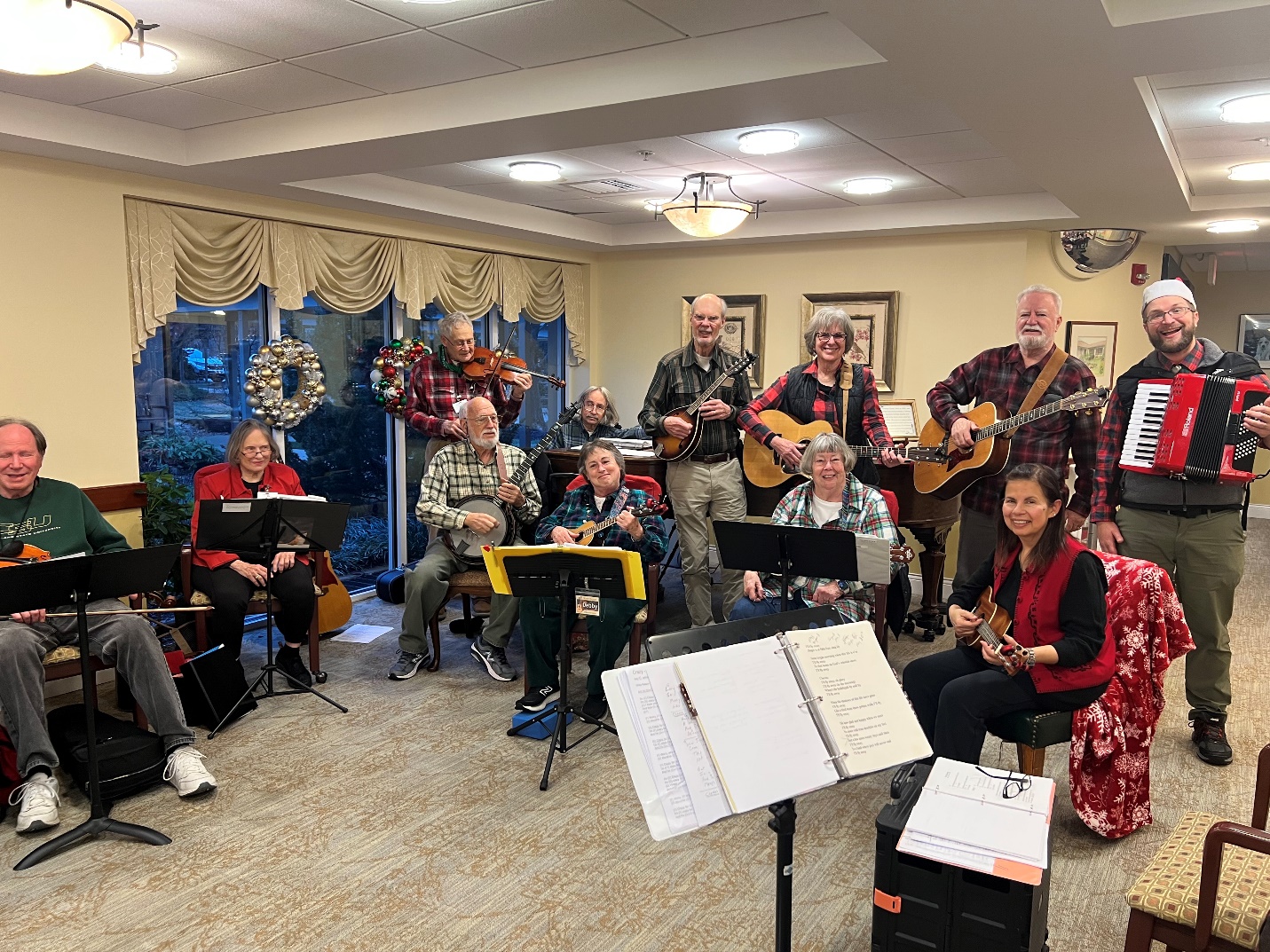
Bill Eaton wrote, “I met my wife, Janet, 53 years ago in Madison, Wisconsin, while I earned a PhD in sociology. We spent five years in Montreal where I taught at McGill. After five years at the NIMH in D.C., I worked as a teacher/researcher in mental health for 40 years at the Johns Hopkins Bloomberg School of Public Health, where I chaired the Department of Mental Health for 12 years. I developed a one-page screening scale for depression disorder (CESD-r) that’s available on the web (cesd-r.com/) and has been translated into 15 languages; and edited a textbook, Public Mental Health, which was recently translated into Chinese. I have published 400 articles and chapters, written or edited eight books and monographs, and have a GPS h-index rating of 120. I retired in 2023. In retirement, to cope with boredom, I published a novella, Outward Bound.We live in Kendall Crosslands, a Quaker retirement community in Pennsylvania, in a country setting that includes lots of trees and deer. I make noise in a band called Sweet Potato Fries, reminiscent of my involvement in the Wesleyan jug band, Vulgar Boatmen. I enjoy supporting Michael Bennet ’87 for governor [of Colorado].”
Bill Eaton (back row, second from right, with guitar) with Sweet Potato Fries
Rob Pratt said, “I’m just finishing up,with four years and seven trips to the Solomon Islands in the Pacific, in developing solar, energy efficiency, and rural electrification projects with my most recent company.” Despite current energy policies, Rob is encouraged by the “progress that’s been made in the renewables, efficiency, and climate sectors over the past several decades. Companies and nonprofit organizations I’ve founded have developed/financed/implemented more than $500 million in hydro, wind, solar, energy efficiency, and policy projects while working in over 50 countries, so I take some comfort in that.
“My career in clean energy has been fulfilling and rewarding, and I take satisfaction in knowing that I’ve made at least some difference in founding/co-founding four companies and four non-profit organizations that have developed, funded/financed, and built/implemented renewable energy, energy efficiency, sustainability, climate, and policy projects in many parts of the world.
“Vickie and I moved to Exeter, New Hampshire in 2019, which we’ve greatly enjoyed; [it’s] an hour from our daughter and her husband in the Boston area, and an hour from our cruising sailboat in Maine.
“Since we are getting up there age-wise, I’m now moving on to my latest gig . . . that is, talking to college students in not only discussing the global clean energy transition, but to urge them to consider a career in renewable energy, energy efficiency, climate, sustainability, and clean energy entrepreneurship. As you know, Wesleyan has the Patricelli Center for Entrepreneurship, and I’m offering to speak to Wes students in the coming semester, which should be fun. . . [College students are] an enthusiastic and appreciative audience!”
John Bach “is still Quaker chaplain at Harvard and lives a charmed, gifted life of social activism. Happy New Year. GO WES!”
Jim Drummond shared that he is “still practicing criminal defense in the Austin area, and my wife, Deborah, flourishes in her hypnosis practice and quantum health healing techniques (QHHT). Good health all around. I have been in touch with Cliff Saxton ’68, Jeff Richards, and Bruce Hartman with some regularity. Cliff has just published another book and is dividing his time between Missouri and Virginia. Jeff just won his ninth producer Emmy in NYC, and Bruce published his 12th novel and was invited to the Western Writers Awards Banquet in Lubbock, Texas.” Jim has eight grandchildren, four to 21 in age. “They are all athletic and way above average (apologies to Garrison Keillor). Our children are even more prosperous than ourselves, as is the natural course of evolution. None of us experience drama or trauma. We are truly an obnoxious lot.”
From Frank Putnam: “Best regards to all surviving ’69ers. I just published my fourth book, Old Before Their Time, describing the results of our 35-plus year study of the effects of sexual abuse on child development. The title says it all—we found numerous examples of accelerated biological aging from neuroendocrine stress response systems, to precocious puberty, to epigenetic changes in their DNA. (I characterize the book as a primer on child sexual abuse disguised as a memoir. It has gotten pretty good reviews so far. I’m now doing a lot of podcasts and learning about this whole world.) Personally, I’ve lived a remarkable 13 years diagnosed with stage 4 prostate cancer and learned that one has to make the most of every day.”
Ed Hayes wrote, “Hope the New Year is off to a good start for you and your family. . . I have started a late retirement that I hope allows time for learning to play the guitar and Spanish, at last! An activity before that has been working with a neighborhood group that celebrates our old D.C. community by restoring and colorfully painting rusty call boxes and inserting information about significant accomplishments. They look good. Warm regards to everyone.”
Ken and Viskha Kawasaki sent from their Buddhist Relief Mission, “Happy New Year. A good leader should be able, honest, upright, gentle, humble, frugal, tranquil, prudent, and courteous.”
Peter Arenella is still in a small, rural village in Mexico with wife, Mia. He says, “family wise, I am blessed.” His adult children are doing well in California—his son, David, lives in an adult group home and “holds down a part-time job. My daughter, Kat, married her partner last year and is teaching graduate students at a private LA university who want to secure their PhDs in clinical psychology. My only real complaint is that I can no longer walk even for a short distance because my right knee replacement has failed and both knees are very unstable. So, I spend all my days watching great films and posting on X.”
Bob Dombroski inquires, “Prior to my arrival at Wes U, while in high school across the river, I heard a rumor that Bo Diddley had stopped at a bar in Portland prior to a fraternity house party gig . . . anyone still around to confirm this distant memory?”
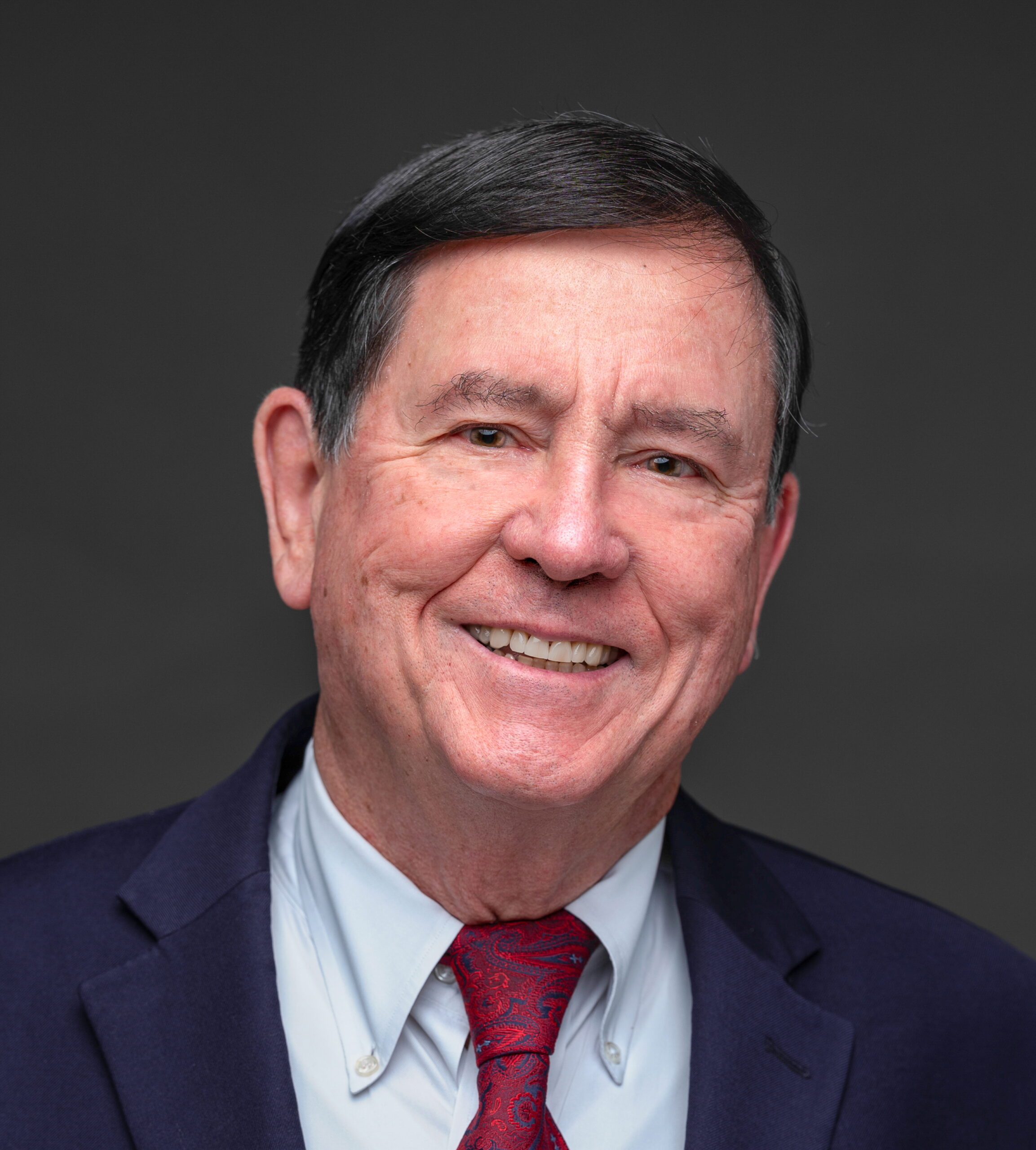
Charlie Morgan
Charlie Morgan has published another book: Truly Dumbfounded, Dismayed, and Delighted is “laced with humor and numerous cartoons [and] covers such vast topics as advice from my father and grandfather, perspectives on achieving success, and law school, lawyering, and courts. Also included are observations about life, marriages, and children, some hilarious and some shocking, along with observations about human behavior overall. (My first book, The Guarantees in the Massachusetts Constitution Imposing a Duty on Massachusetts Courts to Grant Standing to All Persons in All Actions, Including Derivative Actions by Private Parties with Respect to Charitable Organizations, has had some modest success.”
Charlie has received some nice reviews for his new book. Author Leigh Rivers said:
“As a writer, I’m struck by how deftly you balance laughter with reflection, the hilarious with the heartfelt. The inclusion of cartoons to illustrate the humor adds such a personal, inviting layer a visual nod to the idea that life’s lessons often arrive with a smile, even when they also carry a sting. Your journey from grandfather’s wisdom through courtroom realities to the intimate revelations of family and human behavior feels like an open‑handed sharing of what matters most: how we learn, how we love, and how we keep our sense of wonder intact.”
And Publisher’s Weekly noted:
“The title captures the spirit of this playful memoir from lawyer Morgan, author of a weighty tome about the intricacies of Massachusetts State law. Rather than deliver a straightforward autobiographical accounting of his life, Morgan instead offers a series of brief anecdotes and vignettes, many comic, loosely grouped around themes such as women, awkward moments, and philosophical musings. These prove refreshingly free of doctrine, revealing a mind open to possibilities. . . . Takeaway: Lighthearted memoir in anecdotes of law, life, love, and learning.”
Charlie Farrow
It’s light, then it’s dark. I look across the edge of a vast wetland to the holiday lights at the Monkey Farm, a much-loved Old Saybrook watering hole. The cookie bars I made earlier are inedible. I chisel them from the Pyrex.
Bill Heckman: “I am healthy and happy here in the Wild West, where I’ve been since 1980. Retirement is great and many cruises keep us fresh. Jayne and I spend six months is Scottsdale and six in our mountain home near Flagstaff, Arizona. Three kids (60, 57, and 41, plus four grand and one great-grand…) all independent and doing quite well. First half of my career was in retail, ending as senior vice president of Goldwater’s Department Store, and then as senior vice president, retail division, for a chain of specialty stores. The second half was as president of Heckman Marketing Associates Inc., until I hung it up at the young age of 71. Our world has certainly changed over the decades and every place I ever worked no longer exists with many thousands of career jobs now forever gone. I feel very blessed to have always been out in front of the changes and managed to succeed, plus also made time to do a lot of community volunteer work along the way.
“This past year my old bandmate, Dave Cain, reached out from his home in Pennsylvania, and he is doing well. He put me in touch with two other bandmates, Rick Hammer’69 (retired psychiatrist in Vermont) and Josh Barrett ’70 (retired lawyer in West Virginia). All three still play, and I’m trying to relearn my drum kit with friends here in Arizona. There is a band in us all if we take time to listen for the music.
“Farewell, live long, be happy and always keep on dancin’.”
David Webb: “This January, as things turn out, we are flying to ‘our second home,’ a condo in Fort Myers, Florida. (We will fly back to the Cape on April 15 . . . after all, we wouldn’t want to miss entirely Cape Cod’s absolutely most miserable month of April, when it sounds like spring, but because our ocean gets so very cold in the winter, spring comes unusually late to the Cape because we are surrounded by c-o-l-d water! In my humble opinion, April is the worst month on Cape Cod!) We bought a condo in a development my dad retired to in 1986, but he died in 1988 quite suddenly and unexpectedly (at age 63 . . . and here I am, a nonsmoker, and now at age 79, with my 80th approaching in March 2026), and my sister and I sold his unit quickly. Barb and I rented our unit to year-rounders in Florida for 29 years before we took it over 10 years or so ago and started using it ourselves. We feel very fortunate to have retired to Cape Cod and be able to spend a large chunk of our winters in Florida. We return from [Florida in November] to Massachusetts for the holidays and the month of December because our younger son lives here with his family and our two grandchildren (Sophia, a junior at George Washington University, will turn 21 in February, and Charlie [who] will graduate from Tabor Academy, his father’s school, in June). Aaron and his wife, Samantha, run two very successful breakfast and lunch restaurants in Hyannis that are open every day except for both Thanksgiving and Christmas. . . Aaron attended New England Culinary School (run then by our Wes classmate Rick Voigt’s older brother Fran (’62), also a grad of Wesleyan, ahead of us, and now, alas!, deceased), and he manages the kitchen and cooks at both spots, and Samantha manages the dining room and hostesses in the first of the two restaurants.”
Chris Palames: “It has been a bittersweet year. My wife, Judy, and I have been facing the daunting consequences of our daughter Lyza’s diagnosis with ALS and Judy’s identification as the genetic carrier with a high probability of onset increasing with age.
“I’m keeping my little home-based nonprofit, Independent Living Resources, puttering along—serving on a state anti-hunger work group charged by Governor Maura Healey with formulating recommendations in response to federal SNAP cuts and other food insecurity accelerants. I’m also on two disability policy commissions advising our Massachusetts attorney general’s office and another soon to be convened to advise the governor.
“A personal joy has been showing White Nine, a short documentary focused on the Center for Independent Living that I founded in 1974 at Mass General Hospital. The film, which was produced by Bill Martin, will have its festival debut in late February at the Southern Utah Documentary Film Festival. Once that debut occurs, the documentary will make the rounds of other festivals, and I’ll be able to share a Vimeo link more freely with classmates.”
Jan de Wilde: “My wife and I continue to divide our time among a house in a village near Geneva, a chalet in the Alps, and a house in East Hampton, New York. Silly, at our age, but it still works and keeps us near our two sons and families in Switzerland, and a son in New York.” Jan has been “astounded by the change in U.S. politics. . .” and says, “not much left to do but vote and pray, which I do at Anglican/Episcopal churches in Geneva and East Hampton.”
Bill Carter: “Just a note of appreciation to all of the Wesleyan graduates who have been and continue to be supporters of Ashoka: Everyone a Changemaker. Ashoka has elected five people to its fellowship who, later in their careers, have received the Nobel Peace Prize. The latest Nobel Prize recipient, Maria Machado from Venezuela, was elected to the Ashoka Fellowship in 1997 for supporting young people in the most extreme situations of risk on the streets and in the institutions of Venezuela.” Bill wishes everyone, “all the best.”
Richard Cavanagh: “I continue to fail retirement! I have two part-time gigs: teaching entrepreneurship at Harvard and advising a West Coast–family investment office led by three other WesTech alums (and current/former trustees). All of my other paid boards (BlackRock, Guardian Life, and the dreaded Educational Testing Service) have retired me in anticipation of senility.
“My Harvard students are extraordinary—three of them named as Forbes’ 30 Under 30 leaders; and over the past decade, nine of them have won the annual Harvard innovation competition (which raises ugly suspicions among the 35 full-time entrepreneurship professors at HBS that cheating is somehow going on). The answer to these jealous rumors—the Kennedy School admissions staff who find such exceptional talent that even a semester with me can’t stop them.
“I continue to volunteer with nonprofit service outfits (Ashoka, Boston Symphony, the American Academy of Arts and Sciences, and the Volunteers of America—the biggest charity you have never heard of). Not surprisingly, I have come to learn they treasure my financial support far more than my advice.
“Patricia ’79 and I agree we are proudest of our 28-year-old daughter who, despite her progressive left-leaning proclivities and ocean science education at Bowdoin, has turned out to be an accomplished international institutional investor!”
Bob Isard: “In August I retired for the third time. First was as president of a small bank in D.C., then as a regulatory consultant, and finally as a substitute teacher in Philadelphia. Over nine-and-a-half years, I worked my way up from daily assignments to, in the end, almost two years of my own special ed classroom.
“Three professional highlights: dinner with Jeff Loveland and Janis Joplin; my own NASDAQ hearing; and seeing kids with serious challenges do better in my classroom.”
Jim McConaughy: “After not being a familiar face on campus these past 50-plus years, I seem to have found my way closer to Middletown. After living in Andover, Massachusetts, since 2000, my wife and I recently moved to West Hartford to be closer to our two kids and our one-and-only grandchild, age two. He is keeping us young.
“My Wesleyan experience as a music major (for one semester I was the only one) got me interested in South Indian vocal music, which I pursued on campus and in Madras. That eventually lead to a gig off Broadway in a musical with Meryl Streep, where I played the caterpillar among other parts in a production of Alice in Wonderland. Then, after teaching, working for Bell Labs, and creating and enjoying a position for 27 years building bridges between communities surrounding Lawrence, Massachusetts, I got back to what first interested me, writing choral music. My shtick is setting the Psalms to music. After 56 compositions, I’m more than a third of the way to the finish line but in no particular hurry to get there.
“In Andover, I belonged to an Episcopal church with a very good choir. I haven’t quite figured out whether to join the local version of that persuasion or maybe do something different in greater Hartford. I was quite impressed to read about Don Logie and his success in a summer choir, by the way.
“A year or two ago, I decided that it was high time I learned how to ballroom dance and joined the local Arthur Murray affiliate. Having been in West Hartford only three weeks, I found a local chapter only seven minutes away. My goal is to get good enough to properly dance with my wife, who used to teach dance in high school and doesn’t need lessons.
“I last showed up on campus at our 40th Reunion and mourned the passing of our beloved freshman dining hall, a sentiment not shared by the decision-makers. Classmates I stay in touch with include fellow Hewitt niners: Jim Meadors, who has made a name for himself in the lute and guitar circles, and Dave Minugh, America’s gift to Sweden; also Matt Vinikas, who lives atop a mountain in Colorado but is a familiar face in the Connecticut Valley, and Andy Gaus, the stalwart Alpha Delt and brilliant musician, composer, and wordsmith.
“The big move we just completed provided the perfect opportunity to downsize. It would be an exaggeration to claim we shed our stuff proportionally to the size of our new smaller abode, but at least we tried. If anyone has suggestions about what to do with 150 pounds of choral and instrumental music scores (the music department didn’t bite), please call collect.”
Wallace Murfit: “The grand adventure continues; my life is remarkably unchanged. In November my wife and I celebrated 52 years of marriage with a trip to London. In March we celebrated her birthday with a trip to Sicily. Last February my ski posse went to Jackson Hole for a week, keeping my 61-year skiing streak alive. Next month to Whistler-Blackcomb. I am still working part time with two very interesting real estate consulting projects. In October I rowed my boat in the Head of the Charles Regatta. I play a little golf (badly), and I fool around with my small collection of sports cars. All of this is possible because (so far) my wife and I enjoy good health. I was fortunate to go to Wesleyan and Stanford Business School, but everything I really needed to know I learned at Lawrenceville.”
Bob Knox: “I am doing what I can to reach out and connect with family, friends, neighbors, and communities in a conscious effort to strengthen ties in our society during the current political climate. I am thoroughly enjoying my growing relationships with our classmates on a bimonthly Zoom gathering that we have created together since our last reunion. I also host a monthly acoustic music gathering of friends, old and new. Music and food are magic in creating community. I volunteer regularly at San Quentin prison as one of several coaches for an inmate running club that has been recognized in a documentary, 26.2 to Life, which you can see on many movie platforms including Delta flights. I am blessed by two sons, their wives, and four grandchildren who are constantly expanding their horizons, and we are all planning wonderful vacations together. And, importantly for these class notes, John Mergendoller and I are continuing to grow the relationship that we started at Wesleyan by
Let’s start with the increasingly inevitable obituary report. Our classmate, Jim Ruhlen, died on July 4, 2025, in Overland Park, Kansas. Jim transferred into Wesleyan as a sophomore from Baker University, a school in Kansas, and spent three years at Wesleyan, majoring in chemistry. He won a Woodrow Wilson Fellowship to study chemistry at Caltech, but, after a year or two of that, decided to go to medical school. After earning his MD from the University of Kansas, he had a long career as a doc in the Kansas City area. Based on the many testimonials on the obituary website that I saw, he was much loved and appreciated by patients and colleagues. Jim is survived by his wife of 59 years, Leigh, two sons, two grandchildren, and many nieces, nephews, grandnieces, and grandnephews. Dave Garrison did not know Jim at Wesleyan but came to know him later in life when Dave and his wife bought a condo in Prairie Village, Kansas, that was just a mile away from where Jim and his wife lived. Dave described Jim as “warm, generous, and kind.”
On a happier note, our classmate Anthony Caprio, who served as president of Western New England College for 25 years (from 1996 to 2021), was honored in September 2025 by the school with the Delbridge Family Spirit of Philanthropy Award. Among the many nice things said about Anthony as he received this honor, was this: “Few individuals have shaped the trajectory of Western New England University as profoundly as Dr. Caprio. His vision, relentless pursuit of excellence, and ability to bring ambitious ideas to life transformed not only the campus landscape, but also the institution’s identity and aspirations.”
I wrote about George McKechnie in the Fall 2024 Issue, noting that in addition to practicing clinical psychology, he had started some “home audio” businesses. He was the founder and president of Audio Excellence, Inc. and then two more audio companies, Axiom Home Theater and Sync My Home Inc. He now has a new enterprise, called SmartHomePlanner.com, a web business designed to help consumers understand smart homes, so they can make informed decisions about what to buy and how it can be custom-tailored to their specific needs.
McKechnie is clearly looking forward. I am looking back (and I should note, my wife and I still have a working rotary phone on our kitchen wall). Not long ago, I found myself thinking about the summer before our freshman year. I was pretty sure that the college sent us a book that we were supposed to read for a discussion that was to take place during orientation, but I didn’t read it (and, I remember, I was embarrassed about not having read it when my group—the first floor of Nicholson 5—met for a discussion led by anthropologist David McAllester). The book, I was almost certain, was Hannah Arendt’s Eichmann in Jerusalem: A Report on the Banality of Evil, which I now realize caused quite a stir and created deep divisions, not only nationally but in the Jewish community. Arendt also wrote extensively about totalitarianism, and it occurred to me, in my dotage at age 80, that Eichmann in Jerusalem might be of greater interest to me now than it was when I was a teenager, given recent events in Israel, Palestine, and in the USA.
In order to check my memory, I sent emails to some classmates (Steve Sellers,Tom Drew, Gar Richlin, and Reuben “Johnny” Johnson) asking them if they remembered the college sending us Arendt’s book. I won’t reveal what each did and did not recall (the responses ranged from absolutely no recollection at all to some clear memories), but I will tell you that Reuben (who was in CSS) confirmed that I was right—the book was Eichmann in Jerusalem.
Reuben subsequently sent me a flyer showing that in 2013, in order to commemorate the 50-year anniversary of the publication of that book, there was a conference at Wesleyan. The promotional materials for the conference included the following: “Arendt completed writing her work on the Eichmann trial while she was a fellow at Wesleyan’s Center for Advanced Studies (now the Center for the Humanities) and first published it as a series of articles in The New Yorker in 1963. It immediately caused a controversy that has not fully subsided to this day; it also opened up a new chapter in the public awareness and understanding of genocide and played a crucial role in the emergence of the academic field of Holocaust studies.”
You guys remember receiving and reading (or not reading) this book?
Whether you do or not, I now have read the book and think Arendt had some valuable things to say about Israel, Palestine, and totalitarianism. As evidence that Arendt’s work is still, or once again, relevant, here is a link to an article that appeared in The Conversation in late January titled “Repeated government lying, warned Hannah Arendt, makes it impossible for citizens to think and to judge”: Hannah Arendt article.
We celebrate three of our classmates who have died: Percy H. Whiting III (August 22, 2025); Randolph A. Wedler (August 25, 2025); and Andrew J. Kleinfeld (November 7, 2025).
Percy, who majored in physics at Wesleyan and pursued for three-and-a-half years graduate work in physics in Germany, went on to a career in data processing. He lived in Portland, Oregon, where he participated in a Vietnamese community that became a “major part of my life,” being “privileged to assist, to a modest extent, in quite a few success stories among my young protégés.”
Pat Curry “knew Randy well as our lives dramatically intersected in the ’60s and ’70s.” Percy was a “brother of mine in KNK” and “graduated Phi Beta Kappa as a German major . . . In late spring of 1967, we hitchhiked for two-and-a-half months through Austria, Italy, and Greece sharing many adventures.” Pat goes on to write: “We met up again in New York City during the Vietnam antiwar tumult and the assassinations of King and Kennedy. We were both very antiwar and had avoided the draft successfully. Randy had turned his back on a likely position in the foreign service because he detested the war and found employment at an abortion referral service because he supported freedom to choose . . . Both of us became very involved with antiwar organizing . . . While others in our class were pursuing careers in medicine, law, and academia, Randy and I spent several years in the quixotic, failed quest for a new, more- left political alternative. Like many like us, we eventually had to cave into reality, leaving politics to pursue some sort of a living. Randy found a way to pay his bills by becoming an IT specialist. He married Barb, also an activist, and lived an extremely frugal life in Missouri. Somehow, they managed to send their five children to college, including two sons to Carnegie Mellon. . . .”
Andrew was a force of nature in our class, one of our most intellectually gifted members whom everyone seemed to know and admire. After graduating from Harvard Law School, he “intended to try to get a senate seat in Alaska. Nelson Polsby had shown us how this sort of thing is done.” That didn’t work out, but he found he enjoyed practicing the law in Fairbanks. After serving on the district court in Alaska, President Reagan having appointed him, the “first President Bush elevated me to the Ninth District Circuit Court of Appeals” where he served to the end of his life. I am one of the few who did not know Andy at Wesleyan, but I was fortunate to witness his intelligence, sense of humor, and common sense from participating with him in a monthly Zoom group convened by Rick Crootof. Though dying of prostate cancer, he bore it and the recent death of his wife, as Rick points out, “with realism, humor, and incredible calm.” As Rick wrote to Rachel (one of his three children), much to the delight of Andy, a Rhodes Scholar, your father “had a great life, career, and family, with universal respect and affection from all of his classmates, I’m sure at every level. I will always smile when I recall his surprise and modesty at how everyone in Fairbanks greeted him with friendly words and gestures.”
On to happier news. John Knapp had, on October 13, the “memorable experience . . . of attending Nat Greene’s seminar on the Spanish Civil War, giving my talk on Carpetbagger, and then a delightful dinner hosted by the History Department at a downtown restaurant. Rick Crootof drove me both ways, and Bob and Priscilla Dannies, and Tom Broker all attended . . . The seminar was just what you would have expected from Wesleyan students—thoughtful, somewhat argumentative, and well researched. Nat was excellent and a marvel at 90 plus. The talk went well to a smallish audience. I concentrated on how the book came into being rather than taking much time dissecting Mitchell’s life but did talk some about how clever he was in basing his lawsuit on the ‘equal’ provisions of Plessy and not the ‘separate,’ joined with his clever demand for equal accommodations that the railroads could not meet, a first-class Pullman ticket for Blacks. All seemed to go well, and the questions asked were stimulating. The dinner was a wonderful trip down memory lane, hosted by Cecilia Miller, the chair of the department . . . I did quote Spike Dartheny’64 in summarizing my Wesleyan experience: ‘The aim of education is to endanger one’s soul in an atmosphere of enlightened discourse.’ The mission hasn’t changed much in 60 years.”
Gene Bunnell,professor emeritus, Geography and Planning, the University of Albany, writes that he and “his wife, Lynne, have relocated from Albany, New York, to Rockaway, New Jersey.” In September 2024, SUNY Press published his book, Buffalo’s Waterfront Renaissance: Citizen Activists, NGOs, and the Canalside Project.
The highlight of Christmas 2025 for Robert Dearth was the assembly of his children, who came from around the world to celebrate in their new condo in Cabo San Lucas, BCS, Mexico—from Singapore, his oldest son Matt and his wife, Tracey; Sebastian from the NYC area; Nicholas (recently graduated from Gettysburg University) from Madrid; and Mateo from London. “Fishing and many dinners out together [were] planned amidst the sun and sand there.”
Paul Gilbert and his wife have recently moved to “a senior living center that provides a life-care setting for its residents.” They “worked for two months cleaning out our small house of everything we thought was surplus . . . When the day for moving in arrived, we both realized that we still had too much stuff. We turned our two bedroom, two bath, [and] living room into what looked like someone’s attic. My advice to anyone considering moving into a small living space: burn your house down and buy just what you need as new! Our cats have made an unhappy transition too. The female is fairly comfortable, but the male is making trouble for everyone. I had a long talk with him before we moved, but he just rejected all my comments. We’re now (after some months) all better adjusted, and we’ve made many new friends. I’m planning to write a book about this relocation . . . to offer some of my insights about late-age moving. I had a few surprises, even after working with aging seniors in my pastoral ministry.”
Bud Smith shares the good news that his sonnet, “Butterflies,” is a prizewinner in the Maria W. Faust Sonnet Contest.
Butterflies
Butterflies in Paris make weather here
(so chaos theory says) since sensitive
conditions dictate systems linear.
Minor perturbations are a sieve
for metaphor, as changing states affect
emotions everywhere. But don’t blame me
for scientific ways that interject
a pause in pretty scenes. Just let it be.
Edward Norton Lorenz and Poincaré
wrote the book on such esoteric stuff,
enlarging thought on how the cosmos works
while challenging the mediocre fluff
that passed for light but drowned in certain quirks.
Which means we’re left to weather on our own:
In sun or clouds or words close to the bone.
Bud has written a beauty, so much to admire. As I wrote to him, “I don’t know of a sonnet that begins most of its lines with a trochee. And who outside of the masterful brings in proper names and gets them to rhyme, well almost, ‘let it be’ ‘Poincaré.’ The theme of the poem is timely and moving. Did you take a class with Richard Wilbur? I think he is the one who pointed out to me that Frost wrote ‘disguised sonnets.’ I have a feeling and hope there are many who ‘Do not scorn the sonnet,’ who will read yours and delight in doing so. Congratulations!”
On perhaps a lesser note, Bud’s poem, “The Pool,” has been selected as a finalist in the One Condoms poetry contest, the winning entry to be on the boxes of condoms. Here is Bud’s poem, which I found by far to be the best among those trying to be the Poe of Prophylactics.
The Pool
The small
of your back
is a deep
still pool beneath
the waterfall
of your
spine.
David Luft’s writing career continues. Beyond States and Nations: Toward a Central European Intellectual History: Essays “has just been accepted for publication . . . I am also writing a book about my life, which I am calling An Education. The writing has gone very well . . . and I hope to finish it in the coming year. The third book on Czech intellectual history is a bit further off.” David ends with this note of nostalgia: “PS: Have I told you that when I was babysitting for Ohmann, I saw a book on the shelf called Silent Spring? The first I’d heard of it.”
Barry Thomas sends this good news: “2025 was an important year for our Dreaming for Change work in Burundi. The nutrition, health, preschool, primary school, and microfinance programs continued to grow, expand reach, and have increased impact on the lives of children and their families in the communities where we work. Most important, several new sources of support and funding have partnered with Dreaming for Change and made significant, multiyear funding commitments. What started eight years ago with provision of a daily cup of nutritious porridge to a few hundred malnourished children and their mothers has become a very substantial, well-organized, well-recognized, and sustainable community center dedicated to the improvement of human well-being in rural Burundi. I can say with pride that the U.S. friends of Dreaming for Change did a great job of helping to get it all started. Dreaming for Change is now providing a comprehensive and growing array of services that are helping a community of very poor people break out of their subsistence life. Education for children and adults is the theme that is driving all the programming. I cannot thank enough the Wesleyan classmates who have supported Dreaming for Change financially and with their thoughtful encouragement during these start-up years.” News to celebrate.
We end with a great update from Jonathan Peter Monroe. “As a retired landscape architect, I am enjoying volunteering to repair a local, city-owned historic cemetery here in Portland, Maine. It has involved me in jackhammering out concrete post bases so new fencing can be installed and cutting of and coring out rusty pins holding tombstones to bases, and re-laying slumping brick sidewalks. I love being outdoors and staying fit. Be well classmates.”
Gar Hargens writes: “Sold my office building last September; after 57 years there, I’m surprised I don’t miss it more. My firm, Close Associates, continues from my home office. I moved most of our remaining files to the University of Minnesota Northwest Architectural Archives, where I’ve established a foundation to support their work. Instead of fees, I’m asking current clients to contribute to the foundation. I’m working on houses and remodelings for friends and with a younger firm, reworking a residential development that includes assisted living and low-income housing.
“Missy and I attended a large wedding in Vermont this summer that brought family we hadn’t seen from near and far. We had several recent holiday family events with grandkids from California and [in] spring, college graduates we hadn’t seen for a while. Grandson Soren was just early admitted to Williams. I preached a different W but he’s a Junior Olympic Team cross-country skier, so no chance. Son James is working remote from New Haven as partner; Cara studies law there. Her summer internship is with our Minnesota attorney general, so we’re excited they’ll be here with us.
“Missy continues to chair the board of the Saint Paul Public Housing Agency. The PHA houses about 8% of Saint Paul residents, all low income, with 80% of funding coming from the federal government—it’s been extremely challenging. Time-outs at our lake house are ever more precious. Our door(s) are always open for anyone venturing into our demonized state. We decry what’s happening in Washington and encourage our representatives, with financial resources and vocal support, to do all they can.”
Arthur Rhodes writes: “Enjoying life after retiring five years ago from 50 years of medicine. Spending quality time with my spouse, Leslie C. Newman of New Orleans, taking care of my small home in Illinois, feeding the birds, and tolerating deer mooching the food in the bird feeders. Am painting with photography, showing my work on Instagram (ArthurRRhodes_Photography). Most of my six grandchildren are in or finished with college or getting ready to matriculate. Am still enjoying relatively good health for now.”
John Graves writes: “This has been a year of stimulating reunions with Blanche and Bob Bast and Mike and Rob Abel with us in Denver. Bob continues to teach, see patients, and do research at MD Anderson in Houston, as well as completing his tour of all U.S. national parks. Rob and Mike also joined us for an extended lunch, describing their international travels and their ongoing work in extending eye care and social justice. (Congratulations, Rob on your Distinguished Alumnus award!)
“Janmarie and I are both enjoying retirement and planning a visit to my brother, Charles, and his family in Geneva, Switzerland, following our visit to southern Italy and the Amalfi Coast. We’re enjoying our reading groups, and I’m continuing to write, study classical piano, hike, snowshoe, and fly-fish.
“I’ve become active in Colorado Faith Communities United to End Gun Violence and also participate on the vestry of a small Episcopal parish, with a focus on social justice with homeless and immigrant populations.”
Rob Abel, MD, writes: “I am teaching a course on How to Read the Mind through the Eyes this spring at Washington College. As president of Delaware’s Vision to Learn (VTL.org), we have made Nicholas Kristof’s 2025 donation-request list and will outfit a second mobile clinic van. The 27,000 children who have received free glasses have improved their classroom standardized test results.
“There is always more going on, such as our donation of AfroBrasilian art to three major museums. Wellesley’s Davis Museum will be sharing their expertise in this area with Wesleyan in the spring.”
Geoff Geiser writes: “Our family is thriving. Our two children, Lynn and Erik, are at the top of their game and getting close to retirement age. Our four grandchildren are likewise doing very well, and we were blessed recently with the birth of our first great-grandchild, Raelynn Tait. Carole and I celebrate our 60th wedding anniversary on June 12, and we still enjoy our home in Pennsylvania and summer home on Long Beach Island, New Jersey. Regards to all.”
Tony Accetta: “Having retired from a career chasing fraud and corruption as, first, a lawyer and federal and state prosecutor, then, as a fraud investigator with major Wall Street investment banks, I am safely retired in Colorado, enjoying the greatest wife in history, along with sons, stepdaughters, and six grandchildren. I’ve lost some mobility to nerve damage but am otherwise healthy and can still play some golf from an adaptive cart. No complaints. Ran 10 marathons in the day; happy to go around the block with a cane now. Active with OpWalk, a volunteer orthopedic group doing free surgeries in South and Central America and Mexico, and the Education Program of the Colorado Symphony.
“My book, You the Jury, How Wall Street Cashed in on the American Dream and Nearly Killed It, is an insider’s view of what really caused the mortgage crisis of 2007. In short, I was on the inside and know who did what. I recommended all my clients go to jail and then retired.”
Robert MacLean writes: “As fellow classmates follow the growth of their families combined with aging, they are relocating in bigger numbers. Nonetheless, I remain in touch with Phil Russell, Ralph Jacobs, and occasionally John Dunton of Wombat fame.
“On a personal note, I ended a 50-year full-time/part-time teaching career as a ski instructor, most recently with the Snowmass ski school in Colorado, now preferring to ski with friends here and abroad with my new reverse shoulder replacement—one of many skiing related surgeries.
“I also continue to be haunted by age with the FAA and the insurance world as a whole, as I continue flying personally, occasional charter, and as a CFI-I flight instructor.
“All in all, spending time with family and friends in the San Francisco Bay Area, Baja, California, and Basalt, Colorado, skiing, hiking, flying, and socializing while ‘giving back’ as a member of a few boards, has been more than rewarding in retirement.”
Tom Pomeroy writes: “Gretchen and I spent the holidays in Playa del Carmen, Mexico, where we have been going for 20 years. It’s sort of like summer camp for old adults: The same folks have been coming each Christmas, and we love spending time with them. Our kids enjoy their kids, and their grandchildren and ours have become good friends too. Pretty special.
“After many years on our HOA board, the last few as president, I was pleased to announce my complete and full retirement. A terrific experience, but one that should only be endured once!
“I appreciate that President Roth has been very outspoken about the role and importance of liberal education, and I am grateful for my experiences and friends at Wes. Best to all!”
Carl Calendar writes: “I am retired from my work as dean of humanities at Brookdale Community College and living happily in my condo in Red Bank, New Jersey. Two grandchildren, Devin and Luke.”
John Dexter writes: “Carol and I consider ourselves blessed when we see the challenges others of our age are facing. There’s nothing wrong with us that being 30 years younger wouldn’t fix! Still we’re making adjustments to address where we are in life.
“After 55 years of boating together, our last boat, which we appropriately named Finale, is on the market. After 34 years in the same house, we are exploring independent living facilities. We’re somewhat less interested in travel, although we are going to Mexico in February. We both participate in YMCA activities to keep fit. We also volunteer locally, which we both find rewarding.
“After all these years I still consider my scholarship to Wesleyan to be one of the most significant gifts I ever received. I had no idea how valuable a Wesleyan education would be while I was receiving it. Best to all.”
Lanny E. Walter writes: “I am still practicing law since 1971. I live in Saugerties, New York, about 100 miles north of NYC on the Hudson River, a beautiful place to visit. My oldest son, Benjamin (’88), is a Wesleyan graduate; my other two sons went elsewhere. My wife of 39 years, Carole Furman, is a Vasser graduate, as was our son, Ryan. The third son was a graduate of the University of Rochester. He had a mind of his own.
“My focus in 2026 is to fight against the Trump presidency, standing on street corners in protest of all the harm he is doing to our country. As best I can tell, Wesleyan is standing tall [in the current political climate]. My best to all survivors for the New Year.”
Clyde Beers has been enjoying visits with family: “We had visits with two of three children [and had been with the third recently] and nine of nine grandchildren. Eldest granddaughter has finished a really good education from a super place called Wesleyan—yeah! She now is employed in a research role with Penn Medicine (part of the University of Pennsylvania). Second eldest (grandson) is about to finish from Sycamore later this year (not yet clear where he will head, but very open with multiple options), and our third eldest (granddaughter) will start later this year at Wellesley. All I can say is we are ecstatic at all of their options and to-date results!
“None is into wrestling, but lots of terrific joint sports activity with lacrosse, field hockey, football, and basketball.”
Jon Wilbrecht wrote, “I’ve enjoyed doing part-time business consulting for the past 15 years, both independently and with the SBA. I plan to continue for the next three to five years, if possible.” Jon and his wife will celebrate their 60th wedding anniversary this year.
David Skaggs reported he has joined the board of Keep Our Republic (KOR), a nonprofit working to maintain the integrity of the country’s elections and so our Republic. He says he has been active supporting KOR’s Article III Coalition, an organization of retired federal judges nominated by presidents of both parties, dedicated to judicial independence and the rule of law. David also wrote a letter to the editor published by The Washington Post in November, drawing on his days as a Marine Corps JAG officer to underscore the obligation of military service members to refuse to obey unlawful orders.
Roger Montgomery was pleased to read recent recollections of ’64 classmates and provided the following about his experience right after graduation:
“Yes, we all did answer the service call from JFK (‘Ask not what your country. . .’). I went off to Vietnam as an International Volunteer Services volunteer, as did Peter Hunting ’63. I stayed four years: 1964–1968. [IVS volunteer Peter Hunting was killed in 1965 by the Viet Cong, the first Wesleyan alumnus to die in Vietnam. See this 2008 Wesleyan magazine article about him https://magazine.blogs.wesleyan.edu/2008/01/20/a-death-in-vietnam/.]
“I saw Pete Hunting frequently at the IVS house/office in Saigon. He had just moved from central Vietnam to a Mekong Delta town” when he was killed. “He had arranged for me to be an English teacher in a town on the Cambodian border. When I went to take up the assignment, I had to go alone because Pete was not there to take me to meet local authorities. I later replaced Pete as regional team leader for the Mekong Delta during 1967–68.
“During the Tet uprising in 1968, I was in Saigon. I had just accompanied the body of an IVS volunteer, David Gitelson, to Saigon from the Mekong Delta. He had been shot by North Vietnamese troops. On the first night of the uprising, a number of us naive volunteers went up to a roof top to see what was going on, and someone started shooting at us. Fortunately, the shooter could not aim very well, so I am alive today. I don’t know if the shooter was South or North Vietnamese. But I did learn how bullets aimed near you sound: like buzzing bees right over your head.
“I avoided the draft by already being in Vietnam. When I got the notice to appear for an [army] medical exam, I asked for help buying the ticket to the army medical center in Kentucky. Or [I] suggested that they send out the medical form so that a doctor in the U.S. 25th Division in Cu Chi or a navy doctor in the navy hospital in Saigon could give me a checkup. Or a medic in the Special Forces Team at Long Xuyen (where I was stationed as a teacher) could take my vital signs.
“I never heard back from my draft board, so I did not have to join the army. I answered the call to serve by going to Vietnam as a civilian, doing what I could to help as a member of the NGO that was the forerunner of and model for the Peace Corps.”
Robert Maurer, a former chauffeur, we learn, has self-published a 237-page book about chauffeurs. It’s entitled I’m Circling: From England’s Coachmen to Manhattan’s Chauffeurs (1610–1997). Bob wrote that the book, which is available through Amazon, includes stories about how chauffeurs have been “servants to their clients in the most personal ways.” The stories “illustrate a probable ‘end of an era’ concerning their traditional, social role.” Bob added that this May, his wife, Zoelle, and he celebrate their 50th wedding anniversary.
Great to get this update from Clark Lambert, or “WCL” as he refers to himself:
“Since leaving Yale to accept positions at Rutgers in 1976, my wife, Muriel (PhD Northwestern, followed by postdocs at Harvard and Yale), and I have climbed the academic ladder to become professors at Rutgers. WCL has since become emeritus at Rutgers, but Muriel is still going strong at 82 years old (remember, if you marry Supergirl, she is made out of steel!). All three of our kids are doctors, including Peter ’08, MA ’11, Phelps, and Anastasia; all three have children.
“Some years ago, WCL presented, along with ’64 classmates Steve Baker, MD, and Mark
Dahl, MD, a WESeminar entitled “Living the Impossible Dream” about our experiences setting up summer camps for kids with horrific skin diseases. Steve was awarded the Wesleyan Distinguished Alumnus Award [in 2004]. If you are interested in this award, a word of advice: Do not go to a college as supercompetitive as Wesleyan. WCL is very content just to be an alum.”
It is with regret that I report the passing of four of our classmates: Jim Dresser, Ron Tallman, Terry Irwin, and George Tapley. With the exception of George, their full obituaries—as well as an unabridged version of this note—can be found online at classnotes.blogs.wesleyan.edu. I think, however, they are all deserving of a mention in our notes.
James van Benschoten Dresser, died peacefully on September 22, 2025. After graduation, he served as an intelligence officer in the United States Air Force. After leaving active duty, he received an MBA from Harvard University’s Graduate School of Business and an MA from the Fletcher School of Law and Diplomacy. He joined the Boston Consulting Group and retired early from it as chief financial officer. In retirement, Jim devoted considerable time to civic affairs in his hometown of Salisbury, Connecticut, but the real focus of his activities was Wesleyan. Jim was the third generation to attend Wesleyan, and he showed his loyalty by first serving as interim vice president for University Relations and Finance. He then served on the Board of Trustees from 1990–1993, 1995–2001, 2003–2005, and as chair from 2005–2009. He was elected chair emeritus in 2009. He received Wesleyan’s Outstanding Service Award in 1993 and was awarded Wesleyan’s honorary Doctorate of Humane Letters in 2013. Jim was a lifelong Cardinal baseball fan, and in recognition of his service to Wesleyan, Dresser Diamond on Andrus Field bears his name. Jim is survived by his wife, Laura, a son, and his brother and sister.
Ron Tallman died on March 3, 2025, after a short illness. Although recorded as a member of the Class of 1964, because he took a year off to travel around Europe with a friend (reputedly on 50 cents a day), his allegiance was always to the Class of 1963. After Wesleyan, Ron worked for the Bangor Daily News while earning an MA in 1969 and a PhD in history from the University of Maine in Orono. Ron taught and served at various times as provost and dean for the next 35 years at several universities, retiring in 2007 as Seymour Logan Professor of North American History at Roosevelt University in Chicago. After retirement, Ron created and directed the Canadian American Center at the University of Maine, which was the largest program of Canadian studies in the United States. Ron was an avid golfer, and maintained a 4 handicap until he was 58, when he developed cervical dystonia. He is survived by his wife of 26 years, Noel, a brother, two daughters, and five grandchildren.
After writing about some of Terry Irwin’s activities in the most recent edition of this magazine, it was a shock to learn of his sudden and unexpected death on October 15, 2025. We all knew him as Terry, but, in fact, he was christened Henry Franklin Irwin III. Terry studied English at Wesleyan, played varsity lacrosse, and captained the varsity soccer team. After graduation, he remained at Wesleyan, earning a master’s degree in English while coaching the freshman and, later, the varsity soccer teams. After his marriage to Cynthia Wilson Axton in 1965, Terry taught at Northfield Mount Hermon School, where he taught English and coached varsity soccer and lacrosse. After moving to Jacksonville, Florida, he taught at the Jacksonville Episcopal High School for three years. He left teaching for financial advising at Northwestern Mutual. Terry moved a last time to Concord, New Hampshire. Terry’s life was filled with service to others: building homes for Habitat for Humanity, fundraising for Boy Scouts of America Urban Scouting program, and serving on the board of directors of the North Florida Land Trust among many other charitable activities, of which the most notable was his 15-year association with the Ascentria Care Alliance and Overcomers Refugee Service, working with new Americans to help them build a new life in the United States. Terry is survived by his wife, Cynthia, a son, Tom ’89, a daughter, Carol, their spouses, four grandchildren, and a brother and sister.
Wesleyan has not received an obituary of George Tapley, who majored in art at Wesleyan, and received a certificat d’assiduite from La Sorbonne, an MA in painting from the University of California, Berkley, and a PhD in art history from the University of Minnesota. He taught art history at a number of academic institutions, the most recent being professor of art history at Fullerton College, which ended in 2008. He was the recipient of several grants, and his works are included in several permanent collections, including Wesleyan’s. Perhaps one of our classmates can enlarge on this.
My classmates and brothers at Delta Tau Delta fraternity have been participating in Zoom meetings recently, an activity initiated by Bill Roberts and implemented by Dean Schooler’s daughter, who has the technical ability to get us all up on Zoom at the same time. Those of us who have survived are all in reasonably good shape, subject, of course, to the common afflictions of advancing age. I would recommend Zoom as a good way to reconnect or remain connected with your fellow alumni.
Tucker Anderson reports that small ship cruises are the way his wife, Karen, and he have chosen to travel extensively and learn about new places while only having to unpack and pack once during the trip. Last June they took a Viking Cruise from New Orleans to Memphis with an extension to Nashville and checked off four items on their bucket list and a few more that should have been. Most notable were first visits to New Orleans and Graceland and second-row seats at the Grand Ole Opry. Tucker reported on his athletic activities: “On November 2, I completed my 47th NYC Marathon (56th overall) despite a nagging Achilles injury. Since I will never finish first in any serious athletic competition, my goal is to outlive the other competitors and eventually become the oldest finisher. Last year I was one of the 14 oldest among the 59,000-plus finishers, so making progress.” As you are reading this, he has taken the annual trip to his winter home in Scottsdale, having driven the family Winnebago Travato, sleeping with the big rigs on rest stops along the way.
Don Sexton reports that he has been learning to play the djembe drum and has been invited to play and sing at a concert in NYC in January. He continues to have four to five shows of his artwork each year and continues to develop and perform his stand-up comedy sets. The 9/11 Memorial will be accepting 25 paintings of Ground Zero for their permanent collection, and a jigsaw puzzle company wants to make puzzles of some of his paintings. He has a website for his paintings: www.sextonart.com.
Please, keep your classmates knowledgeable about your recent activities; we were a small class—smaller now—and I, at least, am interested in all of what you are doing.