CLASS OF 1966 | 2025 | FALL ISSUE

We celebrate the lives of Jeffrey Kent Nilson and Robert H. Chickering. Jeff died on January 10, 2025. Though we were fraternity brothers at Wesleyan, both being English majors, I did not get to know Jeff well during our years on campus. But I knew enough to admire him, wanting to be more like him: his infectious smile, easy way with people, wit and good humor. It wasn’t until I became class secretary at our 50th Reunion that Jeff and I began to know one another better. I was, and I wasn’t the only one, stunned, inspired, and grateful for his moving talk at that reunion. I had no idea what he and his wife, Marieta, had been through. And then he began to send contributions to the class notes, contributions that were informative and full of fun—his children’s stories and light verse never failing to delight me and, I am sure, many other members of our class. He clearly loved, and was proud of, his children and grandchildren. I found his reaching out to our fellow classmate, Don Craven, ever so moving. He will be greatly missed.

Rob Chickering died on February 25, 2025, Harold Potter alerting me to his death. Harry “met Rob in grammar school. We both attended the same middle school, high school, and Wesleyan. After that our paths diverged but we kept in touch.” David McNally writes that “Rob (‘Bob’ in our college years) and I roomed together all four years, from 214A Howland Hall to 418 Harriman Hall (reputedly the largest double on campus), to two years in the Commons Club fraternity house. We both started in the College of Social Studies sophomore year and both dropped out midyear. Rob then majored in government, as did I.”  Dave goes on to observe that “Robert never aspired to climb the corporate ladder or make a lot of money. He lived a good life, made and kept friends easily, served his community in many ways, and cherished Rhoda and her two sons. There wasn’t a mean bone in Rob’s body, and he was upbeat and in good spirits to the very end. RIP, dear friend.” Here is a link to Rob’s obituary: https://www.timesargus.com/obituaries/robert-h-chickering/article_8dfb88d3-ed76-5bac-9e10-7dd519adab05.html

Harry and his wife, Lee, “continue to travel,” recently to Sicily. “Stunning island. Great food and classic European hillside villages with spectacular sea views. Too many churches for me but that was to be expected. We plan to be in Steamboat Springs, Colorado, in July this year for our annual family vacation with our three children, their spouses, and our seven grandchildren between the ages of seven and two. We have been in Steamboat several times before for skiing. This will be the first summer vacation there. Looking forward to it. I am still skiing, albeit not so well anymore, and playing a lot of tennis. Last summer, we had our family vacation in Michigan on Lake Charlevois. The grandkids loved the easy access to lake swimming. Beautiful spot.”

Harry shares this update on his “lifelong friend from Wesleyan, Bill Machen, who is still traveling the world. He lives primarily in Bald Peak, New Hampshire, a beautiful golf and recreation community in Melvin Village, with his wife, Leslie. We see them often and have a weekly Zoom call with them and several mutual friends. I also remain in touch with two of my roommates from Wesleyan, Stanton Healy and Joe Pickard. Stanton still lives in Mashpee on the Cape, and Joe lives in Londonderry, Vermont, when he is not sunning himself in Appalachicola or St. Thomas.”

I was delighted to get this note from Robert Dannies. He and his wife, Priscilla, “spent a night with Rick Crootof and his wife, Linda, and participated in the monthly KNK Zoom. We also drove through the Hands Off demonstration in Sarasota, which was quite a turnout and gave us some sense of hope. Finally, Michael Roth’s op-ed in the New York Times seems to have resonated not only nationally, but with many friends in New Haven. Priscilla and I are well; two-week trip to the UK planned in August for walking/hiking in the Lake District and then on to Edinburgh for the Fringe Festival. Keep up the good work.”

I was taken aback by Jack Knapp casually mentioning in an email that he took a class with Rosalie L. Colie while at Wesleyan. I had no idea Colie taught at Wesleyan and wish I had. Her book, Paradoxia Epidemica, was to have a great influence on my work. Hannah Arendt’s name also came up, Jack writing: “On the subject of Hannah Arendt, I have a very distinct memory of sitting in the middle of a couch flanked by R. R. Palmer and her in the home of Edward T. Gargan, where I had been invited for dinner. I listened quietly as they sparred but was awed by the experience. Another great example of the opportunities afforded us by the Wesleyan we attended.” How true.

Jack recently received the great news that Choice Magazine has published a glowing review of his book,  A Carpetbagger in Reverse. “This biography of Mitchell, who has been virtually forgotten by history, is essential reading for scholars to understand the early days of the modern civil rights struggle.” As the email goes on to note: “This is Choice’s highest recommendation, which means your book is likely to be included in the Outstanding Academic Titles 2025 list.” Congratulations on this remarkable achievement! A review by Choice is a prestigious recognition, and A Carpetbagger in Reverse is truly deserving of this honor. This is as good as it gets.

One of Bud Smith’s books is also drawing praise. This past June, Shanti Arts announced the publication a new edition of Claude Clayton Smith’s Quarter-Acre of Heartache. First published in 1985, Bud’s book is an account of “what the late Chief Big Eagle of Connecticut’s Goden Hill Paugussett Indians called ‘the war for the quarter-acre,’ a struggle for one of the oldest (1659) and smallest Indian reservations in [the] United States.” The Hartford Courant said the first edition of Quarter-Acre of Heartache (Pocahontas Press, 1985), by Bridgeport-born Claude Clayton Smith, “easily joins other distinguished works on the American Indian such as Edmund Wilson’s Apologies to the Iroquois (1960) and Dee Brown’s Bury My Heart at Wounded Knee (1970). I would say that is pretty good company.

And congratulations are in order for Bill Dietz on being honored with the Distinguished Graduate Award from the University of Pennsylvania School of Medicine. Here is Bill’s eloquent acceptance speech that captures some of what he has accomplished and how those—his family, the faculty at Penn—have nurtured his splendid career, one that I am delighted to note goes on.

“I am deeply honored to receive the Distinguished Graduate Award from the University of Pennsylvania School of Medicine. I want to begin by citing my wife, Nancy, who deserves to be the co-recipient of this award. She has made this award possible through her tolerance and resilience for our multiple moves on behalf of my career—from Philadelphia to Panama, Syracuse, Boston, Atlanta, and most recently Washington, D.C. It has not always been easy for her to establish her own networks, but she has repeatedly done so with aplomb. Thank you—I am so grateful for your love and support. I would also [like] to recognize Tony and Sue Scirica, our closest friends, with whom we shared multiple respite weekends at their house in Conshohoken during medical school and my internship at CHOP. I am indebted to Jack Yanovski, School of Medicine Class of 1986 who submitted my name for consideration of this award.

“I was incredibly fortunate to have been here as a medical student in the zenith of the pediatric program at HUP. Lew Barness had assembled an exceptional group of pediatricians committed to teaching and patient care—including Frank Oski, Walt Tunnessen, Bill Mellman, and Mike Miller. One of my most memorable learning experiences came from a Saturday morning seminar for medical students interested in pediatrics in which one of these extraordinary clinicians would focus on the differential diagnosis of common symptoms, like diarrhea, abdominal pain, or headache. I still have the notes from those seminars.

“Those who know me know that I ask a lot of questions. I have always been most interested in questions with no answers. These represent the frontier between what is known and what is unknown and identify a question ripe for research. I have been exceedingly fortunate to have worked with mentors who gave me the freedom and encouragement to pursue these questions. Those mentors included Mike Miller and Bill Mellman here at Penn. In an attempt to answer the question of why children with Down’s syndrome [have] an increased susceptibility to infection, I worked with Drs. Miller and Mellman to assess immunoglobulin levels in newborns with Down’s syndrome. The finding that newborns with Down’s syndrome had reduced levels of IgG, and that lower IgG levels could account for an increased susceptibility to infection led to my first two publications in the medical literature.”

We end with a photograph of Will Rhys, Sandy Van Kennen, and Rick Crootof, who attended our 59th Class Reunion, a reminder to all that our 60th Reunion will take place May 22–24, 2026. Please do plan to attend.
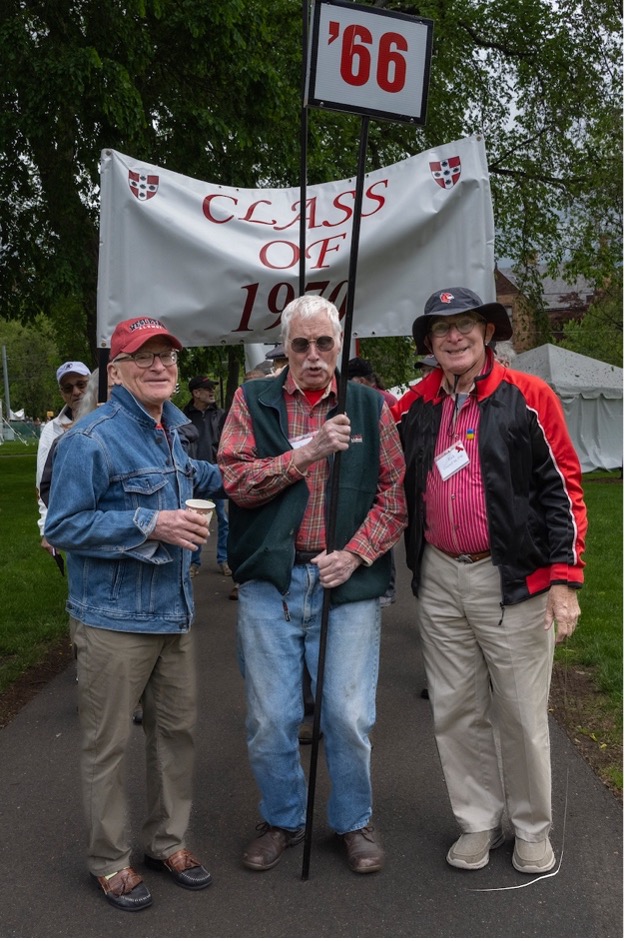
From left to right: Will, Sandy, and Rick at R&C 2025

CLASS OF 1965 | 2025 | FALL ISSUE

Dear Classmates,

Bob Abel, Doug Blazey,Michael Borecky,Mark Edmiston,Tom Elliman,John Hall,Jim Henderson,Jeff Lea, Robert Leonard,Bruce Lev,Tom Meyer,Bob Schmidt,Dutch Seigert, Gary Witten, and I attended our 60th Reunion, along with some of our wives and friends.

Highlights included:
Friday: Cocktail reception and dinner in the Usdan University Center.
Saturday: Presentation on “College Leadership in Turbulent Times” by President Michael Roth ’78 and Beverly Daniel Tatum ’75, former president of Mount Holyoke and Spelman Colleges; alumni parade and assembly featuring remarks by Amy Bloom ’75 and an Alumni Achievement Award to our own Bob Abel; retirement recognition reception in honor of Gina Driscoll (who filled many roles at Wes from 1985 to 2025 and was the wife of John Driscoll ’62); and 60th Reunion reception and dinner.

We also had time for conversation at our reunion lounge area in Boger Hall (the old squash courts). You were missed by all!

Those who wrote in after the fact included:

Jim Brownell: “Born in New York, New York, 1943; Saint James School, Hagerstown, Maryland, 1961; BA, Wesleyan University in economics, 1965, Kappa Nu Kappa; Peace Corps in Turkey, teaching ESL 1965–1967; Burroughs Corporation (now Unisys) software specialist 1969–1986; married in 1977 to Claire Jeanne Carberry of Philadelphia; delegate at Republican National Convention, 1980; divorced 1988, no children; MEd, Temple University in secondary education, 1990; Drexel University instructor in ESL, 1989–1998, including posts in Tokyo, Barcelona, and Malaysia; singer with Orpheus Club and Savoy Company (Gilbert & Sullivan); retired 1998, age 55; Philadelphia Phillies ballpark host 2002–2009; Mexican permanent resident card, 2008; winters in Puerto Vallarta, Mexico, and summers in Philadelphia; craniotomy after serious fall walking in Philly’s FDR Park, 2024; moved to Cathedral Village CCRC, Philadelphia, 2024; still walking and talking, 2025.”

Thomas Meyer wrote: “Hi, Phil, it was great to put a face to all the emails through the years. I was again impressed by the atmosphere of excellence that fills Wesleyan. It was great to be back. While in Middletown, I did some family history at the Middlesex County Historical Society, where I researched my eighth great-grandparents, who were founders of Middletown in 1651. We visited the site of their unmarked graves in Riverside Cemetery. I had no idea of this when I was at Wesleyan and nearly fell out of my chair when I learned of it.”

Guy Danforth added: “I’m a longtime reader, first-time writer to notes. Retired to Sarasota after 40 years in consumer marketing and advertising in the New York metro area. I actually lived across street from Ed Cerny in Summit, New Jersey. My grandson, Brendan Kelso ’27, proclaims that he is ‘finishing what Papa started.’ (I left school after two years.) So, you could say I ultimately did something right!”

CLASS OF 1964 | 2025 | FALL ISSUE

I asked Dick Colton to tell us a little about himself since his WesU days, and he kindly obliged with this interesting summary of his active life:

“In the September after our graduation, I drove out to Berkeley to pursue a PhD in European history. It was the fall of 1964, and so along with the rigorous studies, I was soon engulfed (as was our Wes classmate Bruce Kirmmse) in the Free Speech Movement at Cal. Those were heady years, mixing studies with teaching undergraduates, marching in the streets of Oakland and San Francisco against the war in Vietnam.

“But by the time I passed my PhD exams and began on a dissertation, I think I had just been in school too long, ever since I was five, really, and worn out. In a moment of turmoil, I quit school and signed up to be an apprentice in the Carpenters Union and went to work helping build tract homes in the Oakland Hills. It didn’t take long for me to see how much fun this was, working outdoors, building things, measuring twice and cutting once, driving 16d nails in three strokes.

“After only a year of this, I began to take on side jobs, building fences, decks, whatever, and saw that this could be a career. I wangled my way into a contractor’s license, got noticed by some architects, hired people, and married Chris Mayer, the very, very best thing I got out of my years at Cal. So that became my career, and for the next 30 years, I built and remodeled countless houses and commercial buildings in the Bay Area, running a small crew of five or six, with lots of repeat work from steady customers.

“During all that we raised two boys and a girl, had a lot of fun along the way. About 25 years ago we bought 10 acres and some run-down buildings up in Mendocino County. I planted 250 vines and 60 olive trees, and now I make wine and olive oil and work like a slave every weekend.

“Our kids all settled back near us and gave us four grandchildren—so much fun. Twelve years ago, I joined the Berkeley Community Chorus (baritone), something I didn’t have the wit to do at Wesleyan, and we sing all the great classical repertoire, even in Europe four times. I’m pretty healthy, pee too often, and like to say that at 83, I’m on the 10-Year Plan. I’m really sorry we have lost Bob Berger, Don Ware, Lou D’Ambrosio, and just recently, my close friend, Bill White. The circle narrows.”

Thanks also to Bill Wieland for this update:

“In 2011 I retired after serving as rector of St. Andrew’s Episcopal Church in Greencastle, Indiana, for 24 years; I continue to serve the people of St. George’s Church in West Terre Haute as a supply priest one Sunday a month, as well as Christmas Eve, Holy Week, and Easter.

My wife, Lucy, a retired special education administrator, and I assist our bishop as chaplains to retired clergy, their spouses, and surviving clergy spouses in the diocese of Indianapolis.

“On June 25, Lucy and I celebrated our 50th wedding anniversary—with as many generations of our far-flung family as we could muster— by hosting the Vivaldi Project, a string trio playing period instruments, and throwing a party after their recital at one of our weekly Greencastle Summer Music Festival concerts. Concluding the program, featuring works of Haydn, J.C. Bach, and Boccherini, was ‘50 Vibrant Years: A Grateful Toast,’ a short piece I wrote for the trio to mark the festive occasion. We all had a wonderful time!”

Two other classmates sent messages attesting to the fact that old age doesn’t necessarily mean an old perspective:

Brett Seabury wrote: “After reading the news about what our classmates have been doing over the last 50 years, I was impressed with how much influence Martin Luther King Jr. has had on the Class of ’64. There were many other ‘liberal’ forces on us that can be seen in the activities of our classmates. We have been concerned about our natural and social environment and worked to improve them in a world that has become increasingly malevolent and greedy. I am impressed with my classmates’ efforts to work for social justice and to change inequality, racism, sexism, and classism. Two of my daughters are graduates of Wesleyan, and they have experienced the same liberal forces that Wesleyan presents to their graduates. Bravo for being ‘woke’ and supporting DEI!”

Thanks to Ted Burrowes for the following: “In recent years I have turned my attentions to pursuits of a much more artistic nature than my life heretofore has explored. Mostly this has been photography of a rather introverted nature—exploring what I like without any regard for fame or fortune. Then in March of this year, in response to my distress over climate change, I began crafting words that would fit Bob Dylan’s ‘The Times They Are A-Changin’’ tune but express my perspectives on the climate that is a-changin’. That endeavor has born fruit, and, with help from a friend on the musical side of the project, I have a fully public domain multifaceted song that I hope will spread and be a seed for others’ creative outlets over this crisis.

“This is a low-key endeavor, still eschewing fame and fortune, and, so far, has no website. I expect to produce a PDF of the music and lyrics and will be emailing that to friends and acquaintances with further distribution through word of mouth. (Where are The Highwaymen when I need them?) If you want to learn more, email me at TheClimateSong@gmail.com.”

Dave Townsend sends news of the death of our classmate Fred Lohse. Fred, an emergency room physician for 41 years, died last September, but Dave just learned of it. “What a shock,” he texted. He and Fred were DKE fraternity brothers and roommates for three years. See Fred’s obituary at https://www.jowdykanefuneralhome.com/obituary/Fred-LohseMD. Thanks, Dave, for letting us know—and for telling us a little about yourself. He wrote:

“For the past 10 years, my wife, Gale, and I have lived in Myrtle Beach, South Carolina. After graduation, I received my MBA from NYU then joined the navy where, after 27 years, I retired as a captain in the Supply Corps. This was followed by positions in contract manufacturing and the Sea-Land containerized shipping company. Gale is an internist, but we are both retired. We still take bicycling vacations, having recently returned from Nova Scotia.”

CLASS OF 1963 | 2025 | FALL ISSUE

Two of our classmates sent word of their activities.

Terry Irwin wrote: “Decided it was time for me to step up and communicate with my class.” He retired from Northwestern Mutual in 2007, and he and his wife, Cynnie, moved from Jacksonville, Florida, to Concord, New Hampshire, to be near their then seven-year-old granddaughter. He reports it was “a great move,” and has taken advantage of all that the White Mountains have to offer. He has been involved in supporting refugees from Congo and has assisted four orphaned sisters since 2011, becoming “grandpa” to three-year-old Ayan. Terry and Cynnie moved to NH CCCRC, Riverwoods, starting a new chapter, including meeting new friends and getting involved in the available activities. He still travels a couple of times a week to Concord to tutor in ESL or citizenship and visit with his sister.

Don Sexton writes that he is recovering from a bout with cancer. Without going into details, he said radiation therapy was dreadful, taking away his appetite, so that he dropped to his Wesleyan football weight of 165 pounds. The therapy caused a break in his stand-up comedy on Broadway and his art shows. The good news is that the New York Improv Company has asked him back. Also, an acting company has asked him back (perhaps to reprise his role as King of Hearts in Alice in Wonderland). He now has four months of art shows scheduled for the fall and next spring. Don has written a poem, “Grab Life.” He says: “Those of you who have been through cancer, or had friends or loved ones go through it, know that the emotional dimension of grabbing life can play a major role in recovery.”  The poem ends:

                  Y’all come with me

                  All the best to all my friends

                  Y’all come with me. Grab Life

CLASS OF 1962 | 2025 | FALL ISSUE

We start with two significant genealogical achievements:

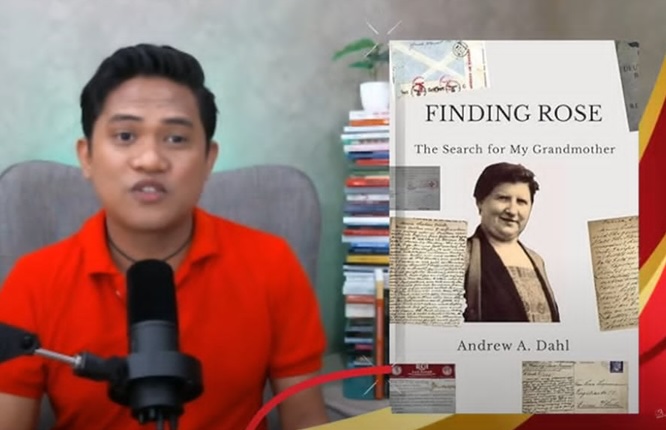
Finding Rose at the LA Times Festival of Books.

First, Andy Dahl writes, “After five years of research, writing, and editing, my book Finding Rose: The Search for My Grandmother has finally been published.” The book chronicles the life and fate of his maternal grandmother, Rose Liepmann Oppenheim, a German Jew, during the Holocaust. “I describe her life beginning with her prominent German-Jewish heritage through her persecution under the Nazis: the inexorable deterioration of her personal condition under the Nazi regime, the forced bankruptcy of her family business, the seizure of her home, the confiscation of her possessions, and her eventual deportation to the Izbica transit camp in Poland, where she perished.” The book also describes how his uncle, who had immigrated to the U.S. as a teenager, joined the U.S. Army and became both a “Ritchie Boy” (a German-speaking interrogator of German prisoners) and General George Patton’s jeep driver. Immediately after the war ended, he drove through the Russian-occupied zone with the unfulfilled hope of finding his mother alive. Still, “thanks to hundreds of letters written from Rose to her children and other family documents carefully preserved in old leather ‘suitcases of sadness’ for 80 years, I have come to know her.” Finding Rose has done well in Amazon sales under the Holocaust Biographies category and was featured at the 2025 Los Angeles Times Festival of Books. Andy concludes: “I owe my ability to do historical research and write a book of this type to my time spent as an American studies major at Wesleyan many years ago.” 

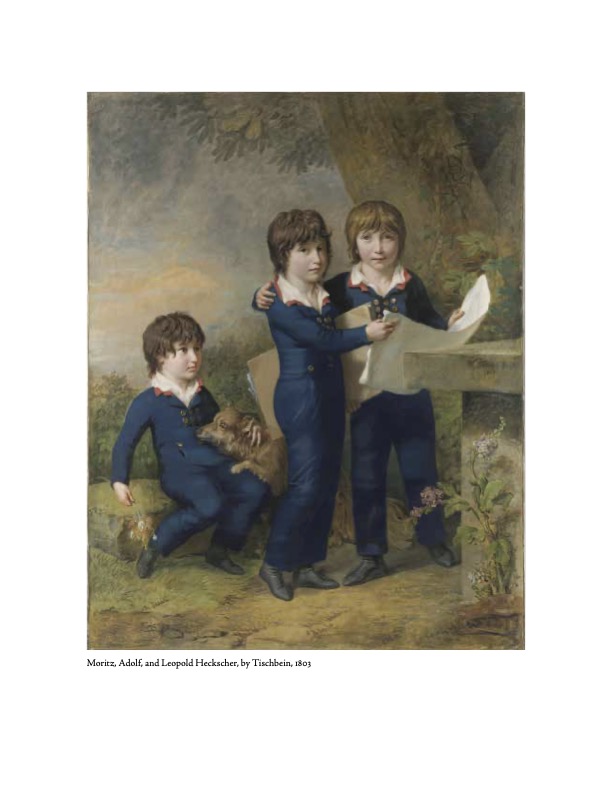
Morrie Heckscher’s ancestors

Second, Morrie Heckscher “used the COVID lockdown to address what to do with a family archive I’d inherited, finally giving it to the Historical Society of Pennsylvania—but not before composing a family history based upon its hundreds of post–Civil War letters, early photos, diaries, etc. These documented a classic American story: all about race and religion; ambition, immigration, and assimilation; patriarchs, powerful women, and family dynamics. These provided the kind of granular, unselfconscious evidence you don’t get on Google. The result, thanks to my Wesleyan education, is more history than hagiography. The Heckschers were from Hamburg, and the first-generation immigrants were the real achievers. More recently, my wife, Fenella, is about to come out with a biography of Jane Colden, America’s first woman botanist. She and I happily spend much of the time in our garden in the Hudson River Valley.”

Morrie and Fenella in their garden

In other news, John Hazlehurst is “still writing a weekly column for the Pikes Peak Bulletin, and (wonder of wonders) they’re still paying me to do it!” Otherwise, there’s “not much to report from no longer particularly scenic Colorado Springs, as Karen and I look forward to a calm summer with our three reasonably well‑behaved young dogs and visits from the kids, the grands, and the great-grands.”

Bruce and Karen Menke were recently recognized by the Osher Lifelong Learning Institute at the University of Georgia for their participation in classes offered by the institute over the past 10 years. Bruce continues as a highly active democratic supporter, writing “more than 100 op‑eds and letters to the editor, which have appeared in more than 20 print and online media outlets serving the 22 counties within our congressional district, with many letters appearing in The Atlanta Journal Constitution. I have also led a group of 20 letter-to-the-editor writers, who have generated a steady stream of messages to the voters in our area concerning the ongoing attacks on our democracy and the actions that can be taken to oppose them.”

David Lorenzen Sbrega and his wife, Barbara, have both had some serious health problems but “are hanging in there. We still live in Mexico City (since 1970!), have two daughters, [who are] now living in LA and D.C., and a son here in Mexico. He is father to our only grandchild, now four years old. We often visit Barbara’s home village in upstate New York. I retired from my job as a professor of South Asian history in El Colegio de México in 2011 but am sporadically active with academic projects including a recent co‑authored book about an early modern Hindi poet. I applaud President Roth’s efforts to defend the academic freedom of universities against government interference.”

On a late and sad note, Milt Schroeder passed away on July 24, and Chuck Work was among the distinguished speakers at his memorial service.

Since I have a little extra word allowance this time, I conclude with a brief personal note. Helena and I are still living happily in our suburban Toronto home, although as dual citizens we feel quite aghast by the recent turn in political relations. Despite a few “penalties of age” (as a contemporary friend puts it), I keep moderately busy with small academic projects, mainly book reviews and memoir‑ish short articles. I greatly enjoy hearing from Wes classmates and recently tried (with modest success) to establish a somewhat comparable email network among my surviving Springfield (Pennsylvania) high school classmates. To everyone so inclined, please keep your messages coming to me.

CLASS OF 1961 | 2025 | FALL ISSUE

“Not much new these days!” writes Bob Reiser, who reflects your class secretary’s sentiment regarding a meager class news inbox. Thankfully, Bob provided an interesting review of his current interest. He states: “Margaret and I are at our Maine home in Boothbay Harbor for the summer. Over the years I have been on the boards of many nonprofits, both in Maine and Atlanta. One of the most interesting is the local movie theater. I have been on several theater boards, but the economics of the movie industry are unique. We have a one-screen theater, which should not exist in a town as small as Boothbay Harbor (population less than 3,000). In fact, it was going out of business in 2017 when a couple stepped up and offered to buy it, turning it into a nonprofit. Following our recent donation, I was recruited for the board. 

“The theater’s economic challenge is that only one-half of the annual expenses is covered by ticket and concession sales. We must raise the other half through donations. With the founding couples’ leadership, we have been able to raise the money to keep the theater growing. While the theater has access to all the new movies, the secret is to appeal to the community with free shows [and] food events and determining audience preferences. The other challenge a theater has is that it has no control over its revenues. Movie distributors determine how long the show must be in the theater, and they set how much of the revenue they will take. In the past, it was 40% for first-run shows. Now they take 60%.”    

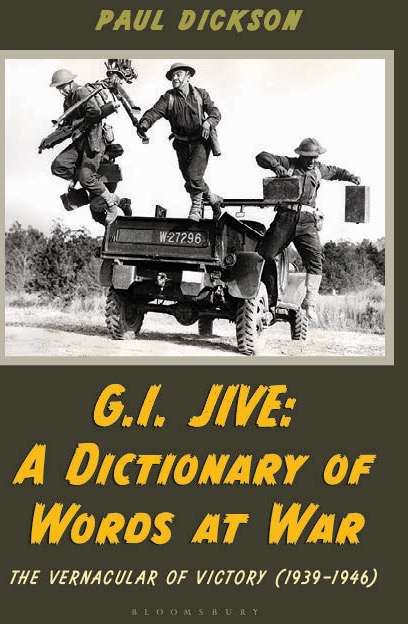
             Paul Dickson has a new book, out October 1 from Bloomsbury. G.I. Jive: A Dictionary of Words at War: The Vernacular of Victory (1931–1946) is described by Paul as a “discursive dictionary, which means plenty of anecdotal material.”


Respectfully submitted,

Jon

CLASS OF 1960 | 2025 | FALL ISSUE

The first 65th Reunion organized by Bill Walker and Dave Hohl was held via Zoom on May 24, 2025. That was followed by a second 65th Reunion via Zoom on June 9 organized by Kate Micari, associate director for annual giving. Those attending these events appreciated the opportunity to renew old friendships.

Nici and John Dobson have moved from Florida to a life-care community in Williamsburg, Virginia, where they will be closer to family and friends. They look forward to again experience a change of seasons.

Congratulations to Dan Nebert who was recognized on June 21, 2025, with the Distinguished Alumni Scientist Award from Oregon Health Sciences University. He has been doing research for 50 years. An example of his work is the discovery of the aryl hydrocarbon receptor (AHR) transcription factor that regulates the CYP1A gene, which is important for many critical life functions. Specific single-nucleotide variations in this gene were then shown to result in birth defects and numerous clinical disorders.

Ira Sharkansky reported in June that he and his wife, Varda, used the safe room in Protea Retirement Village when they were under attack from Iranian missiles. That must have been stressful and hopefully their situation has improved.    

Neimah and Paul Tractenberg do regular three-to-four-mile walks, sometimes together and sometimes separately with friends. They dote on, and spend a lot of time with, the four offspring of their son and daughter-in-law who live nearby. Paul is still heavily involved with two long-standing advocacy efforts—one is an 11-year-old lawsuit on behalf of the public school students of the Lakewood School District in New Jersey; the other is a 25-year effort to preserve a unique 120-acre property near West Orange, New Jersey.                 

Frank Reed of Walbridge, Ohio, passed away on November 29, 2024. He worked as a psychiatrist for various institutions and in private practice for 30 years. He enjoyed listening, singing, and playing music of all kinds. He loved being outdoors sailing, hiking, and scuba diving. He was married to his wife Margaret for 29 years and is also survived by his two daughters from a previous marriage and six grandchildren. He was preceded in death by the mother of his children, Eleni Gillis. My condolences to his family and friends.

Bill Walker wrote to let us know that Don Skinner passed away on July 3 in Santa Monica, California. He was a physician who was renowned for his work in the field of urological oncology and who spent three decades of his career building a urology treatment and training program at USC. Throughout his life, Don enjoyed playing sports, including basketball (for which he was recruited to play at Wes), tennis, and golf. He was preceded in death by his wife of 62 years, Shirley, and a daughter, Carol. My condolences to his family and friends.

My oldest grandson, Holden, recently received his bachelor’s degree from Western Washington University here in Bellingham. It has been a special treat to have an occasional lunch together for the past three years.

With this note, I have resigned as class secretary after having served in the position for 20 years. Please contact me by email if you are interested in becoming the new class secretary with the responsibility for creating class notes twice a year.

CLASS OF 1959 | 2025 | FALL ISSUE

Bob Chase reports from a retirement residence in Virginia. Both children nearby keep an eye on him. Bob still follows politics and his favorite sports teams. As many of us do, he worries about the outlook for his grandchildren. He remarked favorably on President Roth’s comments and responses to pressures being applied to education. Ted Fiske and his wife, Sunny Ladd, also enjoy life in a retirement community, this one in Chapel Hill, North Carolina. They recently took a Viking Cruise on the Rhone River with an extension to Paris. They enjoyed the fact that the boat took them to sights rather than having to chase the sights themselves. They spend July in Islesboro, Maine, then move to Alstead, New Hampshire, and a lakeside cottage with both daughters nearby. Ted continues to oversee his Fiske Guide to Colleges, 43 years of guiding high school grads, recently my own included. He is proud that Wesleyan has a president who has spoken eloquently on his opinions about pressures on universities.

Tim Day says he and Sandy spend a third of each year in Phoenix, La Jolla, and Jackson Hole. Overseas travel is a frequent supplement. He remains healthy, with gym workouts four times a week. The only change seems to be the pace. From Alan Brooks we learn that for the first time in 40 years, he has had to miss Masters/Senior shot-put competition due to a severe case of gout. He hopes to return to it next year. Pete Rockefeller recently visited Wes and spoke with President Roth who he commends for standing up with courage and integrity for Wesleyan’s principles. Pete is coming to grips with the end of a 50-year career in computers.

We heard from Paul Stevens, who is still working part time for SMRT Architects, a company his great-grandfather started in 1884! After back surgery, he recently ran a two-mile race, at a grandfatherly pace, with his two sons and three grandsons. Well done! They summer in Maine at a cottage they have been to since 1968. Plenty of continuity in this family. Recent hot weather reminded Charlie Huchet of sunning on the roof of the Deke house on “Tar Beach.” The hot weather stands in contrast to the weather at an archaeological dig his daughter was at in Ireland, digging for medieval objects in the mud. He suggests it was easier to find the pub.

Bob McKelvey is still working at the investment company his family started and has recently partnered with a California group. Lots of new systems and issues to resolve. Various ailments have slowed his travels to Wes. He stays in touch with two groups of classmates, an Alpha Delta Phi group and an Oxford College group. He recently joined a group of Alpha Delts, Classes ’57–’61. It is interesting to find out what they have done, including a dining steward who has published eight novels. As with others, he thinks Roth’s defense of academic freedom was well reasoned.

Herb Steiner says that one of his 12 grandchildren is at Wesleyan. He and Ellen still winter in Delray Beach, Florida, then spend the rest of the year in Mahwah, New Jersey. He is “aging out of those difficult violin parts, so I’m playing the viola. The viola music is in the alto clef. Learning the clef is like trying to master a foreign language. I’m still in close contact with Joe Vander VeerBob Ogren, and Tim Martin. All are well.”

Joe Mallory was in Maine for the summer and early fall: “Enjoying the natural beauty of the earth while learning to live by myself. Health [is] good—walking a mile or two daily with modest discomfort from sciatica. Just had two grand-twins graduate from Dartmouth, with another scheduled for next year.”

Bob Gillette shares that he and Marsha “returned to our New England roots last year as we moved from Lynchburg, Virginia, to Springfield, Massachusetts, to a senior community. It was invigorating, recently, as we participated in a humanists discussion group that tackled philosophical questions that felt like the bull sessions of Wesleyan days. Thoughtful neighbors shared life insights and continued questioning where we are, where we have been, and where we continue to go. Indeed, I am finding this lap of life exciting, though not without its challenges. Luckily, Marsha and I, after 66 years of marriage, have settled into a time and place that feels just right. We have our health, canoe paddling is still a passion, [there are] plenty of cultural opportunities to experience, and being surrounded by kind and supportive folks our age, all have made for a very full and active life. I play my alto recorder every day, and I’ve teamed up with a resident violinist for Baroque playtime.

“Within the morass of our political situation, we recently participated in ‘good trouble’ at our own No Kings rally. It was stirring to hear the honking horns of supportive cars pass by as they viewed old folks in wheelchairs and walkers display posters and waving American flags.

“I am still writing with others in a writing group and giving book talks. I have gotten involved in the governance of our community, and my teacher’s blood still courses through my being, though a bit slower. How significant to realize that after 66 years since our ’59 graduation, the essence of our liberal arts education is still a driving force in our lives. Let’s keep going, as long as we have left. Best wishes to everyone with hope and courage that this country can flourish with humanity. Our four grandchildren and two great- grandchildren deserve the opportunities and freedom we experienced.”

In April, Hank Lifson hada show at theHudson River Gallery in Coralville, Iowa, (a suburb of Iowa City). “My exhibition, entitled The Stones of Tzfat (the title derived from John Ruskin and Mary McCarthy), was an impression of a town in northern Israel, which is a center for Kabbalistic mysticism, established in the late 15th century from Sephardic Jews fleeing Spain. I’m pleased at the results since many people viewed the work. I’m also still living, painting, and drawing in a retirement home in Cedar Rapids.”  

Sadly, Ed Murphy lost his wife, Marilyn, last year to dementia. They “had been married for 55 years. I’m slowly accommodating to her passing—near daily swim workouts, visiting friends and family, and making a few new friends. . . . Though my house now is much bigger than I need, I’m not tempted to move. The thought of having to clean out 54 years of accumulated stuff is too daunting. Looks like I’m here for the duration.

“The other day I happened on [the] thoroughly researched and engagingly written two-volume History of Wesleyan University [by Dave Potts ’60] in my library. It set me to reminiscing about our four years at Wesleyan, friends made, professors who inspired us, and President Butterfield, who kept it all focused on liberal arts education. It was 70 years ago this September that our Class of 1959 came together to begin its journey. What a journey it was and continues to be.”

Finally, Alan reports that Laird Burnett wrote to let us know that his dad, Walter Burnett, died on June 8. Alan and Walter were roommates throughout their years at Wes, and Alan said, “I will greatly miss his Christmas newsletter and occasional visits here in Connecticut and at our cottage at Maine.” Our condolences to his family.

CLASS OF 1958 | 2025 | FALL ISSUE

Tony Codding remains active. He visited the Dominican Republic in February and spent three weeks in Aruba in April. He has turned 90 and plans a river cruise from Paris to Normandy.

Dick Goldman is at least as active—he is taking adult education classes at Brandeis on the topic of investing. He is exploring starting a discussion group on the same topic. He still winters in Florida and continues to play golf and tennis.

David Schalk is alive and well; he wrote briefly on June 19 but did not send an update.

And John Watson is a published poet. He was pleased to get a poem published in the winter edition of The Lyric. He does not play hoops anymore but plays billiards with his grandson and enjoys a daily walk with his wife, Marilyn.

Denny Allee is living comfortably in Provincetown where he and Mel Cote went to work summers after Wes graduation.

In June we had a Zoom reunion hosted by the Wes alumni office. Brisk discussions by Burr Edwards, Dick Goldman, Bob Hayes, Neil Henry, Art Levine,and yours truly. Much easier than in-person reunions, especially for our crowd.

Kay and I are still living in an active golf community and try to keep up with the youngsters, some as young as 70.

Keep the notes coming,

Cliff

CLASS OF 1957 | 2025 | FALL ISSUE

Earlier this year we reported the passing of your class secretary Bob Smith. In Bob’s last email to the Class Notes editor, he wanted to ensure that he shared with classmates that his beloved wife, Betty, to whom he was married for 64 years, predeceased him in March. With the news of Bob’s passing, we received the following remembrances:

Ken Travis: “It is indeed sad that we have lost another stalwart member of the Class of ’57. We will miss Bob’s good-natured humor and gentle, but persistent, solicitations for news. I will always value the times we shared as classmates, teammates, and summer camp counselors.”

Mark Feldman wrote: “Bob Smith will be sorely missed. His children and their progeny should know that Bob was among the salt of the earth. I first knew him as an Eclectic pledge in the fall of 1953 and was delighted to correspond with him as class secretary in recent years. Every time I saw Bob, he was calm, thoughtful, and helpful. He was one of my favorite Eclectics, and his loss is deeply felt.

“I also want to salute my dear friend and classmate Bill Shepard on his 90th birthday earlier this month [June]. My daughter, Ilana ’91, drove Mimi and me to celebrate with his wife, Lois, daughters Stephanie and Robin, and sundry friends at their lovely home on the Eastern Shore. Bill was a fellow French major and distinguished his Wesleyan degree with a notable career in diplomacy that included a tour as U.S. consul general in Bordeaux. It was great fun to reminisce with Bill about the glory days of Wesleyan in the Butterfield years. He recently showed his gratitude to Wesleyan by gifting a significant collection of French novels to the Olin Library. Thank you, Bill.” 

A link to Bob’s obituary can be found online at classnotes.blogs.wesleyan.edu.